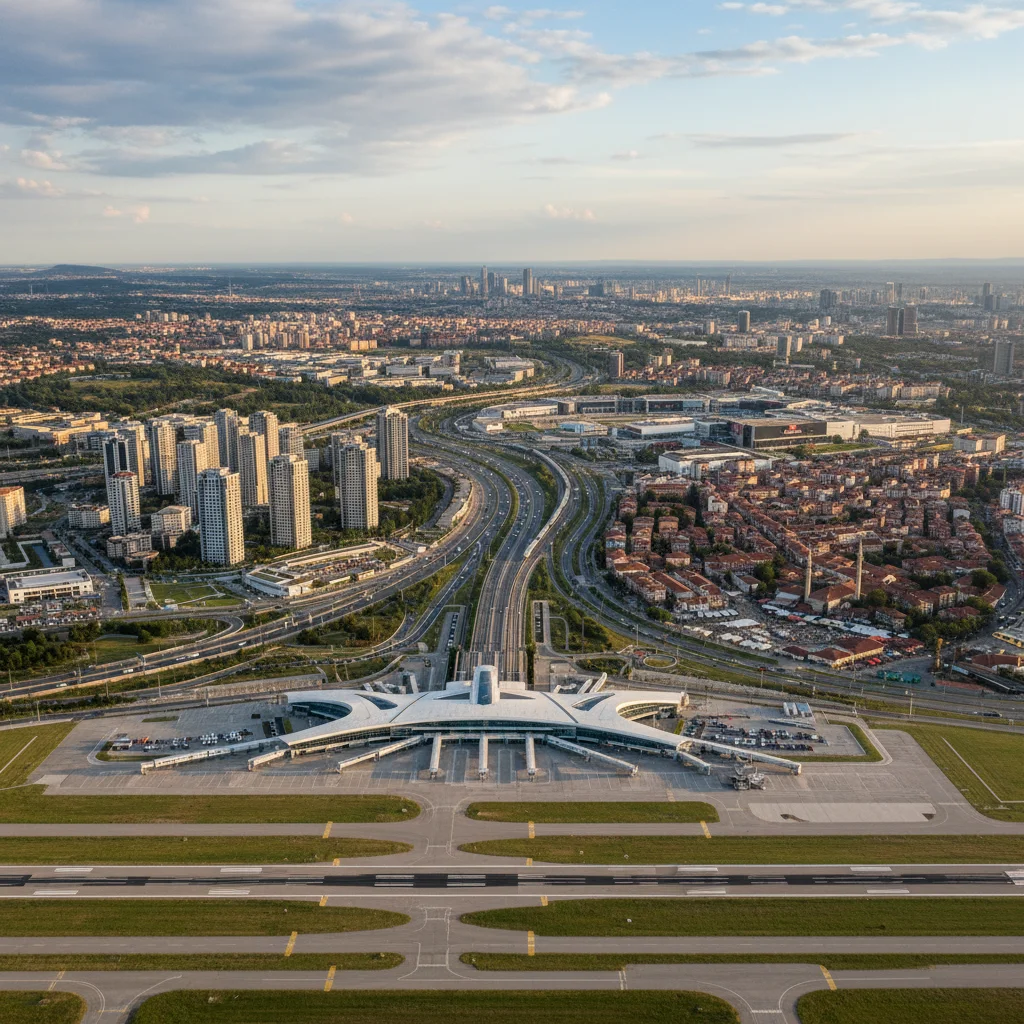
Long-Term Real Estate Investment in Turkey: Strategic Guide for 2026
Why Long-Term Real Estate Investment in Turkey Remains Compelling in 2026
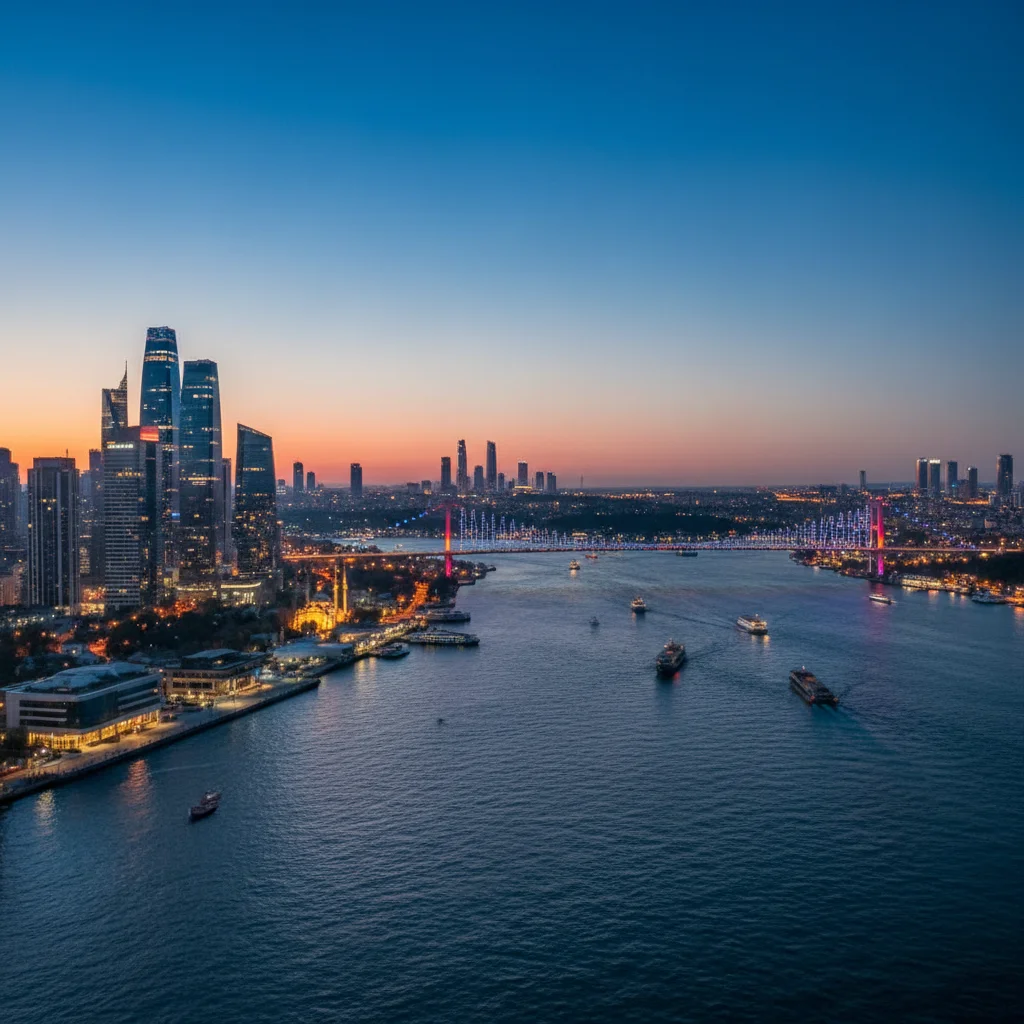
While short-term speculative flipping has cooled across global property markets, long-term real estate investment in Turkey continues to attract institutional capital, family offices, and individual cross-border buyers. In 2026, Turkey's property landscape is shaped by fundamental structural drivers rather than fleeting momentum: a young and urbanizing population exceeding 85 million, persistent housing supply deficits in tier-one metropolitan hubs, and an extensive pipeline of transport and financial infrastructure.
For patient investors willing to commit capital over a five-to-ten-year horizon, Turkish real estate offers a rare combination of tangible asset security, inflation-indexed rental cash flows, and strategic geopolitical positioning bridging Europe, the Middle East, and Central Asia. Unlike volatile equity markets or short-term holiday rentals subject to strict licensing, long-term residential and commercial holdings benefit from predictable legal protections, generous holding-period tax exemptions, and steady urban regeneration.
Macroeconomic Fundamentals and Urban Housing Demand
Turkey's major urban centers—led by Istanbul, Ankara, Izmir, and Antalya—experience continuous internal migration driven by university enrollment, industrial expansion, and service-sector job creation. Construction starts over recent years have struggled to keep pace with household formation and the urgent replacement of aging building stock. Consequently, newly built, earthquake-compliant developments in well-connected neighborhoods enjoy exceptionally low vacancy rates.
Furthermore, the normalization of Turkey's monetary policy framework and tighter domestic credit conditions have sidelined highly leveraged local speculators. In 2026, this dynamic creates a healthier entry environment for cash-ready international investors who can negotiate favorable acquisition terms with reputable developers or motivated secondary-market sellers.
Long-term capital appreciation in Turkish property relies heavily on connectivity. Over the past decade and extending through 2026, massive state and municipal investments have reshaped commute times and land values:
Istanbul Metro Expansion: Ongoing extensions linking outer residential districts like Başakşehir, Çekmeköy, and Pendik directly to central business hubs and Sabiha Gökçen and Istanbul Airports continue to compress travel times and push up surrounding per-square-meter values.
Istanbul Finance Center (IFC): Fully operational in Ataşehir on the Asian side, the IFC anchors white-collar employment, banking headquarters, and sustained executive housing demand across neighboring districts.
Regional Transport Corridors: High-speed rail upgrades connecting Ankara, Izmir, and Bursa, alongside expanded motorway networks across the Marmara basin, have unlocked secondary industrial and logistics cities for long-term yield investors.
Looking for the best real estate investment opportunity in Istanbul?
We help you choose the right property based on your budget and goals
Core Advantages of a Five-Year-Plus Holding Strategy
Approaching Turkey as a five-to-ten-year investment rather than a two-year trade unlocks specific fiscal and regulatory advantages embedded directly into Turkish law.
Capital Gains Tax Exemption After Five Years
Under Turkish income tax legislation, individuals who sell a residential or commercial property within five years of the acquisition date (measured from the official title deed transfer date) are subject to progressive capital gains tax (Değer Artış Kazancı) on the inflation-adjusted profit. However, once the property has been held for five full years, individual owners become 100% exempt from capital gains tax upon resale. For long-term investors, holding past the 60-month mark preserves substantial net returns that would otherwise be eroded by taxation.
Inflation Hedging and Hard-Currency Pricing Power
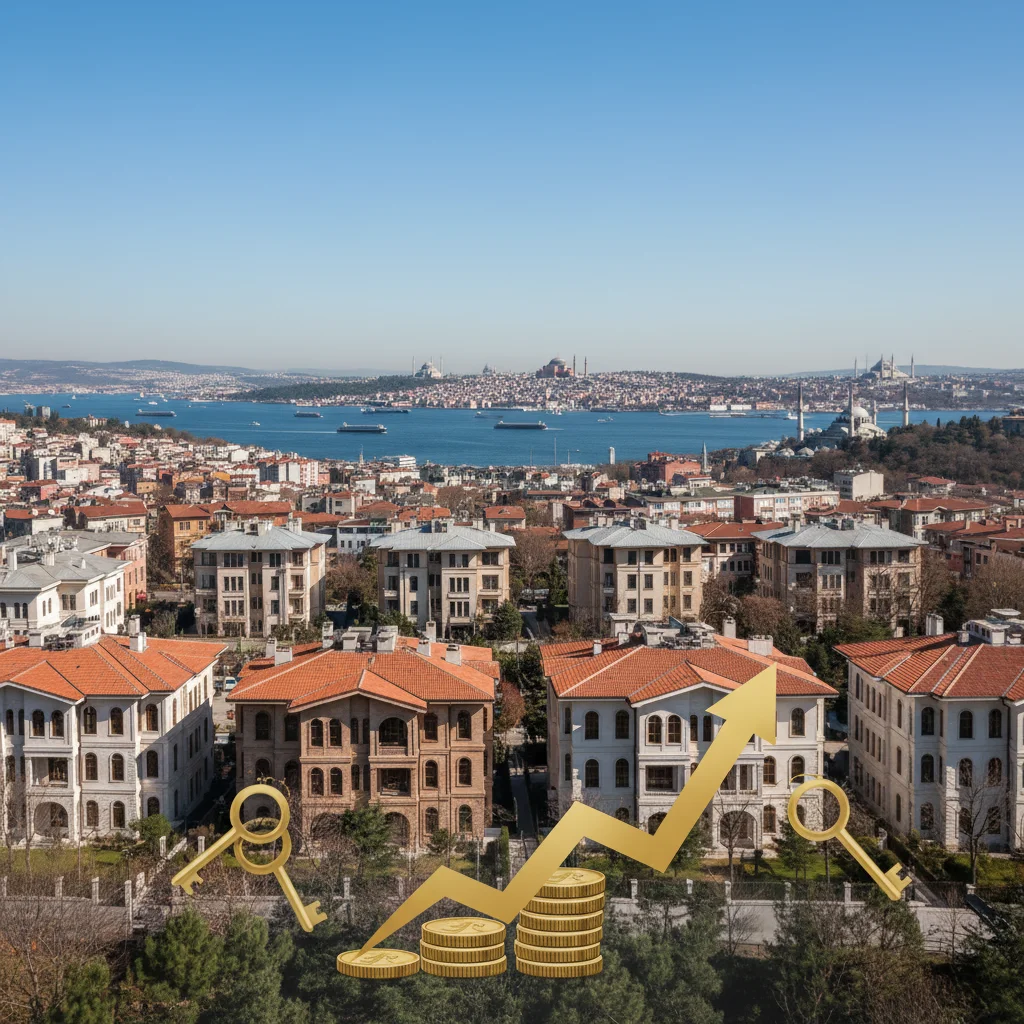
Real estate in prime Turkish districts has historically acted as a resilient store of value during periods of currency fluctuation. Land scarcity in central zones, rising costs of imported construction materials, and labor inflation place a natural floor under replacement values. Over full market cycles, quality properties in top-tier locations tend to re-price upward in line with broader economic benchmarks, protecting purchasing power in USD and EUR terms over multi-year horizons.
Regulatory Shift Favoring Long-Term Leasing
Two major regulatory shifts directly benefit long-term landlords in 2026:
Removal of the Temporary 25% Rent Cap: The emergency 25% cap on residential lease renewals expired in mid-2024, restoring the standard statutory benchmark tied to the 12-month average Consumer Price Index (TÜFE). Landlords can now adjust annual rents transparently in alignment with official inflation metrics.
Tightened Short-Term Rental Rules (Law No. 7464): Legislation governing tourism-purpose rentals (under 100 days) requires a special Ministry of Culture and Tourism permit and 100% unanimous written consent from all apartment owners in a residential building. Because few standard residential complexes achieve unanimous consent, long-term annual leasing has re-emerged as the cleanest, lowest-friction, and fully compliant income strategy.
Key Legal Pathways: Residency and Citizenship by Investment in 2026
For many global buyers, property acquisition in Turkey serves a dual purpose: generating asset returns while securing legal mobility for themselves and their families.
Turkish Citizenship by Real Estate Investment ($400,000 Threshold)
Turkey's Citizenship by Investment (CBI) program remains one of the most straightforward sovereign residency-to-passport pathways globally. Foreign nationals who acquire real estate valued at a minimum of $400,000 USD—and commit not to sell the asset for at least three years—qualify to apply for Turkish citizenship alongside their spouse and dependent children under 18.
Essential Compliance Rules for Citizenship Applicants
To prevent application rejections or delays at the Land Registry (Tapu ve Kadastro Genel Müdürlüğü), buyers must strictly satisfy every procedural condition:
Independent SPK Valuation: An appraisal firm licensed by the Capital Markets Board (SPK) must confirm that the property's fair market value meets or exceeds $400,000 USD.
Foreign Exchange Purchase Certificate (DAB): The full purchase amount must be converted from foreign currency into Turkish Lira via a licensed Turkish bank and documented on a Döviz Alım Belgesi (DAB) before the title deed transfer.
Clean Ownership Chain: The property cannot have been transferred by a foreign national to a Turkish citizen or company within the preceding three years, nor can it have been used previously for another citizenship application.
Three-Year Non-Sale Annotation: A formal restriction (Şerh) prohibiting resale for 36 months is registered on the title deed (Tapu). After three years, the owner is free to sell without affecting their citizenship status, though holding to year five remains optimal for tax-free capital gains.
Investors who do not require citizenship can still obtain a renewable real estate residence permit (Taşınmaz Amaçlı İkamet İzni). Since late 2023 and continuing through 2026, the minimum property valuation required for a residency permit across all Turkish provinces is $200,000 USD, verified by an official appraisal report and reflected accurately on the title deed.
Crucially, buyers targeting residency must verify that their chosen property lies in an "open neighborhood." The Presidency of Migration Management restricts new foreign residency registrations in districts where foreign residents exceed 20% of the local population. Working with an experienced legal advisor before paying a deposit prevents purchasing an otherwise attractive unit in a closed neighborhood.
Feature
Turkish Citizenship by Investment
Property Ownership Residence Permit
Minimum Investment Value
$400,000 USD (appraisal & declared value)
$200,000 USD (appraisal & declared value)
Mandatory Holding Period
3 years (annotation on Tapu; 5 years recommended for tax exemption)
Retained for the duration of permit renewals
Closed Neighborhood Restriction
Exempt (permitted in all non-military zones)
Strict (only available in open neighborhoods)
Family Inclusion
Spouse and children under 18 receive citizenship
Spouse and dependent children under 18 eligible for residency
Path to Full Citizenship
Direct (typically 4–8 months processing)
Eligible to apply after 5 years of continuous legal residence
Top Turkish Cities and Emerging Districts for Long-Term Appreciation
Turkey is not a monolithic real estate market. Rental yields, liquidity, tenant demographics, and capital growth trajectories vary sharply between cities and even adjacent neighborhoods.
Istanbul: The Financial and Commercial Anchor
Accounting for roughly a fifth of Turkey's population and over 30% of national GDP, Istanbul offers the deepest resale liquidity and the most resilient tenant demand in the country. Long-term buyers should evaluate districts based on transit connectivity, seismic building quality, and commercial proximity.
European Side Growth Corridors
Kağıthane and Şişli Borders: Once industrial, Kağıthane has transformed into a central white-collar residential zone minutes from Levent and Maslak business towers. Modern mixed-use complexes here command strong long-term corporate rents.
Başakşehir: Anchored by major medical cities, universities, and spacious master-planned communities, Başakşehir appeals strongly to affluent families and Middle Eastern investors seeking modern, low-density compounds.
Beylikdüzü and Esenyurt Border (Select Projects): Offers lower entry prices per square meter along the E-5 Metrobus corridor. Due diligence is vital here: investors should strictly target reputable developers with completed habitation certificates (İskan).
Zeytinburnu and Bakırköy: Coastal districts offering high-end sea-view residences close to the Eurasia Tunnel and historic peninsula, favored for long-term wealth preservation.
Asian Side Resilience and Urban Renewal
Ataşehir and Ümraniye: Direct beneficiaries of the Istanbul Finance Center. New branded residential projects within walking distance of metro stations enjoy rapid tenant absorption from banking and tech professionals.
Kadıköy (Fikirtepe & Bağdat Avenue): Represents Istanbul's premier lifestyle and urban renewal zone. Newly constructed, earthquake-resistant boutique buildings along Bağdat Avenue deliver exceptional capital preservation and blue-chip liquidity.
Kartal and Pendik: Waterfront Asian-side districts benefiting from Sabiha Gökçen Airport expansion, Marmaray rail links, and organized urban transformation projects.
Antalya, Izmir, and Ankara: Regional Diversification
Investors seeking diversification outside Istanbul often look toward three major regional hubs:
Antalya (Konyaaltı, Lara, Altıntaş): Turkey's tourism and lifestyle capital attracts steady inflows of European, CIS, and domestic remote workers. Altıntaş—adjacent to Antalya Airport—has emerged as a major master-planned new-build zone offering modern resort-style amenities at competitive entry prices.
Izmir (Bornova, Bayraklı, Urla): As Turkey's third-largest city and a major Aegean port, Izmir is renowned for progressive urban demographics, university demand, and high domestic buyer liquidity. Bayraklı leads modern high-rise business development, while Urla attracts affluent villa buyers.
Ankara (Çankaya, Etimesgut): The administrative capital delivers steady, low-volatility rental income supported by civil servants, diplomats, defense-sector engineers, and major public universities. Entry prices per square meter are significantly lower than Istanbul, producing attractive gross yields.
City / Hub
Primary Investor Profile
Estimated Gross Long-Term Yield (2026)
Key Growth Drivers
Istanbul
Capital growth, CBI, corporate rentals
4.5% – 6.5%
IFC finance hub, metro expansion, urban renewal
Ankara
Steady income, low vacancy, defensive hold
5.5% – 7.5%
Government, diplomatic, defense & university demand
Step-by-Step Property Buying Process for Foreign Investors
Purchasing real estate in Turkey is transparent and well-digitized, provided each legal step is executed in the proper sequence. Most transactions complete within one to three weeks once due diligence is finalized.
Legal Due Diligence and Zoning Verification: Before signing a reservation contract, an independent real estate lawyer should inspect the Land Registry records to confirm there are no mortgages (İpotek), liens (Haciz), or inheritance disputes, and verify the building's İskan (habitation license) and earthquake compliance.
Tax ID and Turkish Bank Account: Obtain a Turkish Potential Tax Identification Number (Vergi Numarası) online or via the local tax office, and open an account at a domestic Turkish bank to route funds cleanly.
SPK Property Valuation Report: Order the mandatory appraisal through the TAKBİS system. The report assesses legal zoning, physical condition, and fair market value, remaining valid for three months.
Currency Conversion and DAB Issuance: Wire foreign currency from abroad into your Turkish bank account and instruct the bank to convert the purchase amount into Turkish Lira with the Central Bank, generating the official DAB certificate.
Title Deed (Tapu) Transfer and DASK Insurance: Both buyer and seller (or their power-of-attorney representatives) attend the Land Registry appointment with a sworn translator. Mandatory earthquake insurance (DASK) must be active before the new Tapu is issued.
Utility and Municipal Registration: Transfer electricity, water, and natural gas subscriptions into the buyer's name and submit a property tax declaration (Emlak Beyannamesi) to the local municipality.
Upfront Acquisition Costs and Ongoing Holding Taxes
Long-term investors should budget accurately for transaction expenses and recurring ownership costs so net yield projections remain realistic:
Title Deed Transfer Tax (Tapu Harcı): Legally 4% of the declared purchase value. By market convention, this is either split 2% buyer / 2% seller or negotiated as a buyer cost in developer off-plan sales.
Appraisal, Translation, and Notary Fees: Typically range between $600 and $1,500 USD combined, depending on document volume and power-of-attorney requirements.
Real Estate Brokerage Commission: Capped by Turkish regulation at 2% (+ VAT) from the buyer and 2% (+ VAT) from the seller.
Annual Municipal Property Tax (Emlak Vergisi): Low by international standards, ranging from 0.1% to 0.2% annually for residential units (doubled to 0.2%–0.4% in metropolitan municipalities like Istanbul and Ankara).
Rental Income Tax: Net annual rental income above the statutory exemption threshold is taxed on a progressive scale (15% to 40%). Landlords may choose either the lump-sum expense deduction (15% flat deduction) or actual itemized expenses (depreciation, maintenance, insurance, and management fees).
Long-Term Property Management and Rental Yield Optimization
A strong acquisition only realizes its full potential through disciplined asset management. Across a five-to-ten-year holding period, tenant quality, lease structuring, and proactive building maintenance dictate actual net returns.
Navigating Turkish Tenancy Law and CPI Rent Adjustments
Turkish tenancy law (Code of Obligations) offers strong protections to compliant tenants, making initial tenant selection critical for landlords. Standard residential leases run for one year and renew automatically at the tenant's option unless proper legal grounds exist for termination.
Annual Increases: Rent increases upon renewal cannot exceed the 12-month average CPI (TÜFE) rate announced by TÜİK. Structuring leases with clear payment dates and IBAN bank-transfer clauses creates an indisputable audit trail.
Five-Year Rent Reassessment (Kira Tespit Davası): If rapid neighborhood appreciation causes an existing lease's CPI-adjusted rent to fall well below current market rates, Turkish law allows landlords to file a rent reassessment lawsuit after five full tenancy years to reset the rent closer to fair market comparables.
Ten-Year Termination Rule: After ten extension years following the initial lease term, a landlord gains the statutory right to terminate the tenancy without needing a specific eviction reason, provided formal written notice is served at least three months before the end of the renewal year.
Eviction Undertaking (Tahliye Taahhütnamesi): Many experienced landlords request a separate, post-lease-date signed eviction undertaking from new tenants, establishing clear legal recourse in the event of severe default.
Self-Management vs. Professional Asset Management
Remote international investors rarely benefit from self-managing Turkish properties across time zones and language barriers. Professional property management firms typically charge 8% to 12% of collected monthly rent (or one month's rent for tenant placement) and handle critical tasks:
Tracking monthly Aidat (complex HOA/maintenance fees) to ensure tenants pay operational dues on time while the owner covers capital building repairs.
Coordinating preventive plumbing, HVAC, and appliance servicing to preserve interior condition.
Preparing annual rental income tax filings with a certified Turkish accountant (SMMM) and managing currency repatriation.
Urban Renewal (Kentsel Dönüşüm) and Seismic Resilience
In 2026, earthquake resilience is the single largest determinant of both tenant desirability and resale liquidity across western Turkey, especially in Istanbul and Izmir. Properties built after 2018 adhere to Turkey's stringent updated seismic building codes, featuring raft foundations, higher-grade concrete, and modern structural engineering.
Conversely, buildings constructed prior to 2000 carry elevated structural risk and face steeper discounts on the secondary market. Some sophisticated long-term investors intentionally target older, low-density buildings in prime locations like Kadıköy or Beşiktaş to participate in Urban Renewal (Kentsel Dönüşüm) redevelopment agreements, where landowners partner with developers to replace aging structures with brand-new, high-value residences. However, this strategy requires deep local legal expertise and patience for multi-year construction timelines.
Risk Mitigation Checklist for Long-Term Investors
Avoiding common pitfalls is just as important as selecting a promising neighborhood. Before committing capital to any Turkish property, run through this non-negotiable verification checklist:
Verify the Habitation Certificate (İskan): Never finalize a purchase on a completed building that lacks an individual Kat Mülkiyeti (condominium ownership) or verified İskan without formal legal guarantees. Unlicensed floors or utility issues can cripple resale value.
Demand Transparent Pricing: Ensure the purchase price declared on the Tapu matches the actual wire transfer and SPK appraisal. Under-declaring values to shave transfer tax exposes buyers to retroactive tax penalties and invalidates residency or citizenship eligibility.
Audit Developer Track Records for Off-Plan Units: When buying pre-construction for long-term delivery, inspect the developer's past completed projects, land ownership status, and construction escrow or bank guarantee structures.
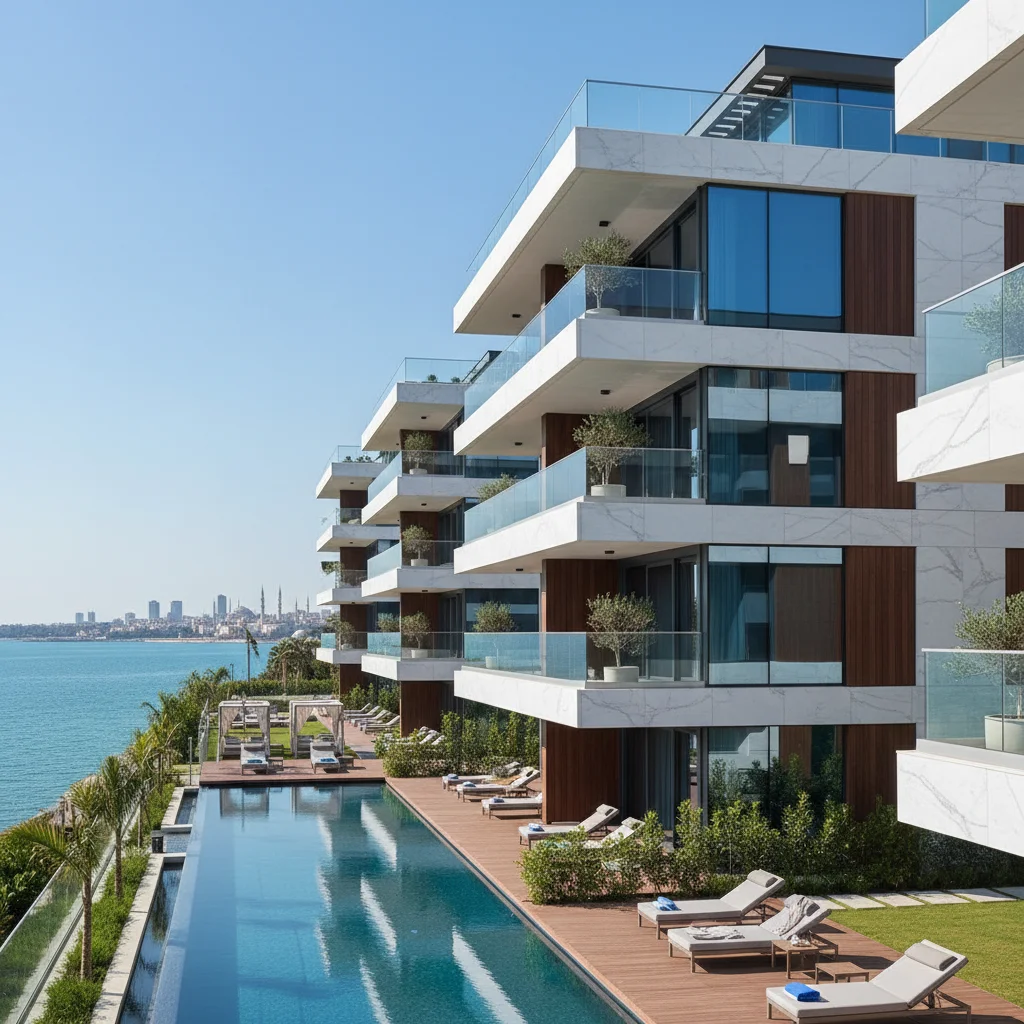
Model Net Yields After Aidat and Taxes: Luxury branded towers with pools, 24/7 security, and concierge services carry high monthly Aidat fees. While tenants usually pay regular Aidat, unusually high fees reduce the base rent tenants are willing to pay.
Avoid Over-Concentrated Expat Enclaves Without Local Demand: The most liquid Turkish properties appeal equally to local Turkish professionals and international buyers. Over-reliance on a single foreign buyer demographic creates exit risk if visa policies shift.
Final Outlook: Building Sustainable Wealth in Turkey's Property Market
Long-term real estate investment in Turkey in 2026 rewards discipline, patience, and adherence to legal fundamentals. By focusing on post-2018 seismic-compliant buildings in transit-rich metropolitan districts, leveraging the five-year capital gains tax exemption, aligning with CPI-indexed long-term leasing laws, and appointing vetted property managers, investors can build a resilient asset base that compounds across market cycles. Whether the primary objective is portfolio diversification, steady inflation-adjusted income, or securing Turkish residency and citizenship for future generations, a structured multi-year horizon turns Turkey's dynamic urban growth into lasting financial value.