US Dollar - USD
- Turkish Lira - TRY
- US Dollar - USD
- Euro - EUR
- Pound sterling - GBP
- Russian Ruble - RUB
- Chinese Yuan - CNY
- Georgian lari - GEL
- Saudi Riyal - SAR
- UAE Dirham - AED
- Syrian Pound - SYP
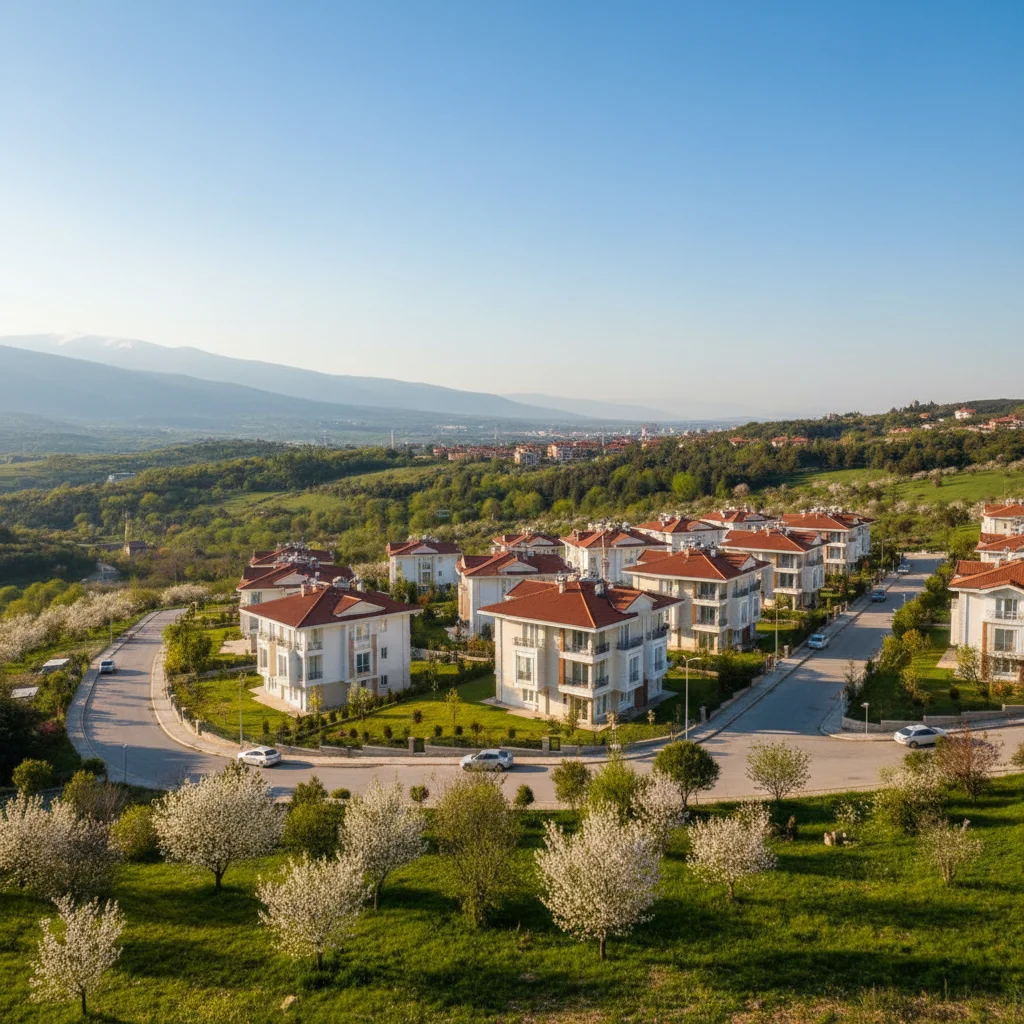
Searching for cheap villas in Bursa has evolved from a niche local pursuit into one of the smartest value plays in Turkish real estate. Known across Turkey as "Green Bursa" for its sweeping mountain forests, fertile plains, and Ottoman heritage, the country's fourth-largest city offers something increasingly rare in 2026: spacious detached and semi-detached homes at a fraction of Istanbul or coastal resort prices.
While prime neighborhoods along the Bosphorus or in Bodrum routinely command seven-figure price tags, Bursa delivers genuine villa living—complete with private gardens, mountain views, and modern residential amenities—starting well below the threshold of big-city apartments. Whether you are seeking a peaceful family retreat, a residency-qualifying asset, or a rental-generating investment within easy reach of Istanbul, understanding Bursa's micro-markets is the key to securing a bargain without sacrificing construction quality or legal security.
Bursa occupies an enviable economic and geographic position in northwestern Turkey. Connected to Istanbul in roughly 90 minutes via the Osmangazi Bridge and high-speed sea ferries from Mudanya, the city functions as both an independent industrial powerhouse and an attractive weekend sanctuary for metropolitan professionals.
Several structural drivers keep Bursa's villa market resilient yet surprisingly affordable in 2026:
Looking for the best real estate investment opportunity in Istanbul?
We help you choose the right property based on your budget and goals
Get a Free Consultation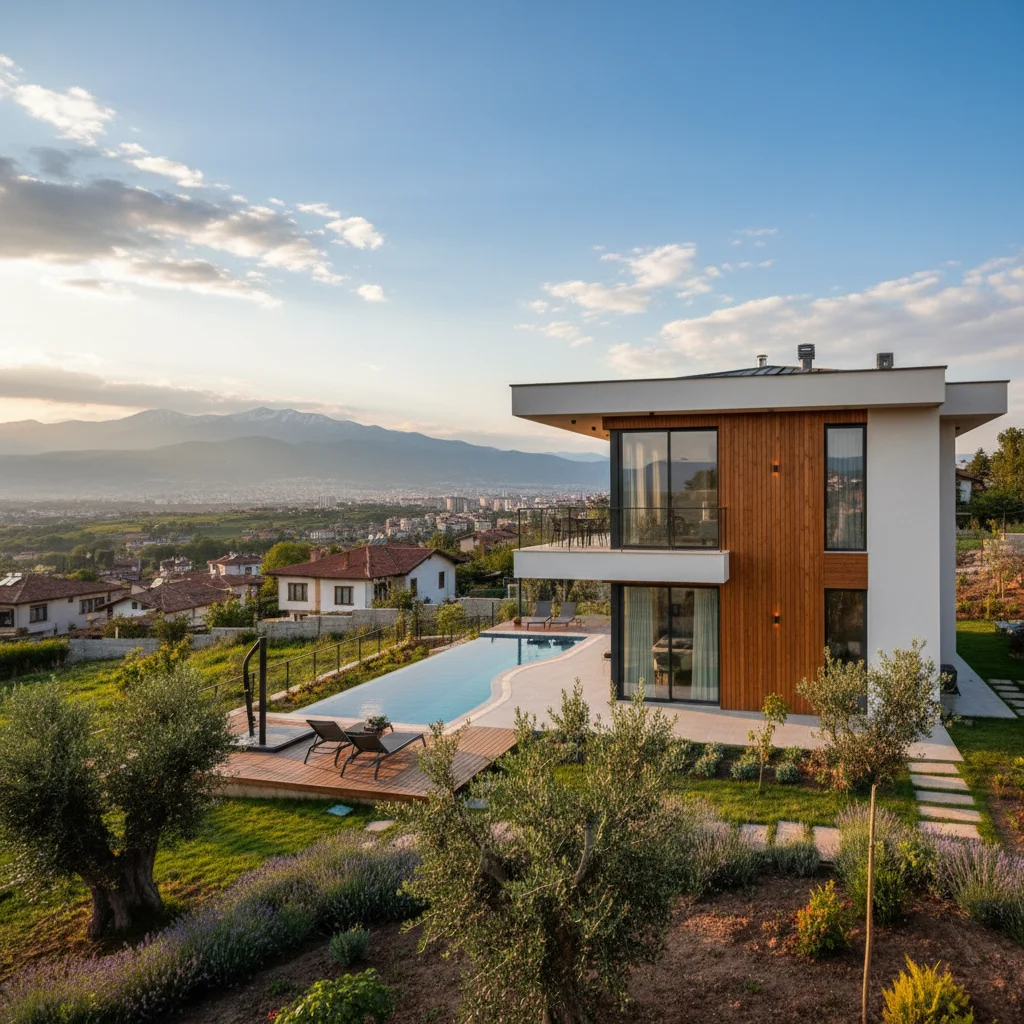
Not all "cheap" villas represent good value. In Bursa, pricing shifts dramatically depending on soil quality, elevation, distance to public transit, and proximity to the Marmara coast. Below are the five primary districts where budget-conscious buyers find the strongest balance of price, infrastructure, and long-term appreciation.
Sitting directly on the Sea of Marmara, Mudanya is the gateway for fast ferries connecting Bursa to central Istanbul. While waterfront mansions carry steep premiums, the sloped residential hills just five to ten minutes inland—especially around Güzelyalı, Çağrışan, and Bademli's outer edges—offer twin and row-style villas at accessible prices.
Buyers here benefit from cool sea breezes in July and August, vibrant seafood promenades, and strong summer rental demand from domestic tourists. Gated compounds built between 2019 and 2026 frequently include shared swimming pools and 24-hour security, reducing the maintenance burden for overseas owners.
Nilüfer is widely regarded as Bursa's most modern, well-planned municipality, favored by engineers, academics, and international families. Core neighborhoods like Özlüce and Balat have grown expensive, pushing value-seekers slightly west into Kayapa, Hasanağa, and the outskirts of Görükle.
These western growth zones feature wide boulevards, newly constructed boutique villa complexes, and close proximity to Uludağ University and major organized industrial zones. Because municipal infrastructure is newer, seismic compliance and utility connections are generally straightforward, making Nilüfer's outer belt a top choice for first-time international buyers.
Located on Bursa's eastern flank along the metro line, Kestel and Gürsu offer some of the lowest entry prices for legitimate, zoned villa properties within easy commuting distance of the city center. Surrounded by fruit orchards and dramatic views of Uludağ's eastern ridges, these districts attract buyers who prioritize fresh air and generous garden plots.
While less cosmopolitan than Nilüfer, Kestel in particular has seen steady investment in family-oriented housing projects. For buyers comfortable with a quieter, more traditional Turkish neighborhood atmosphere, eastern Bursa delivers exceptional square footage per dollar spent.
For buyers willing to live 45 to 60 minutes outside central Bursa, Gemlik and historic İznik present remarkable value. Gemlik sits on a sheltered gulf with olive-covered hills and quick highway access toward Yalova and Istanbul. Meanwhile, İznik—famous for its vast freshwater lake and UNESCO-listed heritage—draws retirees, remote workers, and boutique eco-tourism investors.
In both areas, older detached homes and modest newly built cottages can be acquired at entry-level budgets, provided buyers carefully verify municipal zoning and agricultural land boundaries.
Osmangazi forms the historic and commercial heart of Bursa. Although the dense city center consists mostly of apartment blocks, climbing toward the green foothills of Doburca, Çekirge's upper streets, and Demirtaş on the northern plain uncovers pockets of reasonably priced semi-detached villas. You gain immediate access to shopping malls, historic bazaars, and hospitals while keeping a private yard.
| District / Area | Typical 2026 Entry Price (USD) | Common Villa Type | Primary Advantage | Rental Appeal |
|---|---|---|---|---|
| Kestel & Gürsu | $135,000 – $210,000 | Semi-detached & small detached | Lowest price per sqm; metro access | Steady local family demand |
| Nilüfer (Kayapa / Hasanağa) | $185,000 – $290,000 | Modern compound twin villas | New infrastructure; strong schools | High (professionals & expats) |
| Mudanya (Inland Hills) | $190,000 – $330,000 | Sea-view duplex & triplex villas | Ferry link to Istanbul; coastal air | Strong seasonal & annual yields |
| İznik & Gemlik | $125,000 – $220,000 | Country cottages & hillside homes | Lake/sea lifestyle; tranquility | Moderate (weekend & holiday) |
| Osmangazi (Demirtaş / Foothills) | $170,000 – $275,000 | Urban-edge row & garden villas | Immediate access to city center | Consistent year-round occupancy |
When browsing listings for affordable villas in Bursa, expectations should match realistic 2026 construction and land benchmarks. Turkey's updated building codes, inflation-adjusted labor costs, and higher steel and concrete prices mean ultra-cheap detached homes almost always come with trade-offs in location, age, or legal status. Here is how the market divides across three main budgets.
In this bracket, you are typically looking at "ikiz villa" (twin/semi-detached) or townhouse-style triplex units sharing one structural wall with a neighbor, usually offering 140 to 180 square meters of gross living space and a compact 50-to-120-square-meter garden. You will find these in Kestel, Demirtaş, Gemlik, and older pockets of Görükle. They offer an authentic multi-story home with private outdoor space without the high upkeep of a large estate.
Stepping into the $200,000+ range opens the door to fully detached homes inside managed boutique compounds in Kayapa, Mudanya's upper slopes, and Hasanağa. Properties in this tier typically include 3+1 or 4+1 floor plans, underfloor heating, private parking, thermal insulation, and access to shared pools or landscaped parks. Crucially, crossing the $200,000 appraised valuation threshold also unlocks critical immigration advantages.
While above the strict "cheap villa" category, investors seeking Turkish citizenship often purchase two affordable villas—for instance, two $205,000 twin villas in Nilüfer or Mudanya—rather than a single luxury mansion. Splitting a $400,000+ allocation across two budget villas diversifies rental income, improves resale liquidity, and lets an owner live in one unit while leasing the other.
Real estate buyers in Turkey must align their budget with current immigration regulations, which underwent major tightening prior to 2026. Buying the cheapest possible house without checking valuation and neighborhood rules can leave an investor unable to obtain a residence permit.
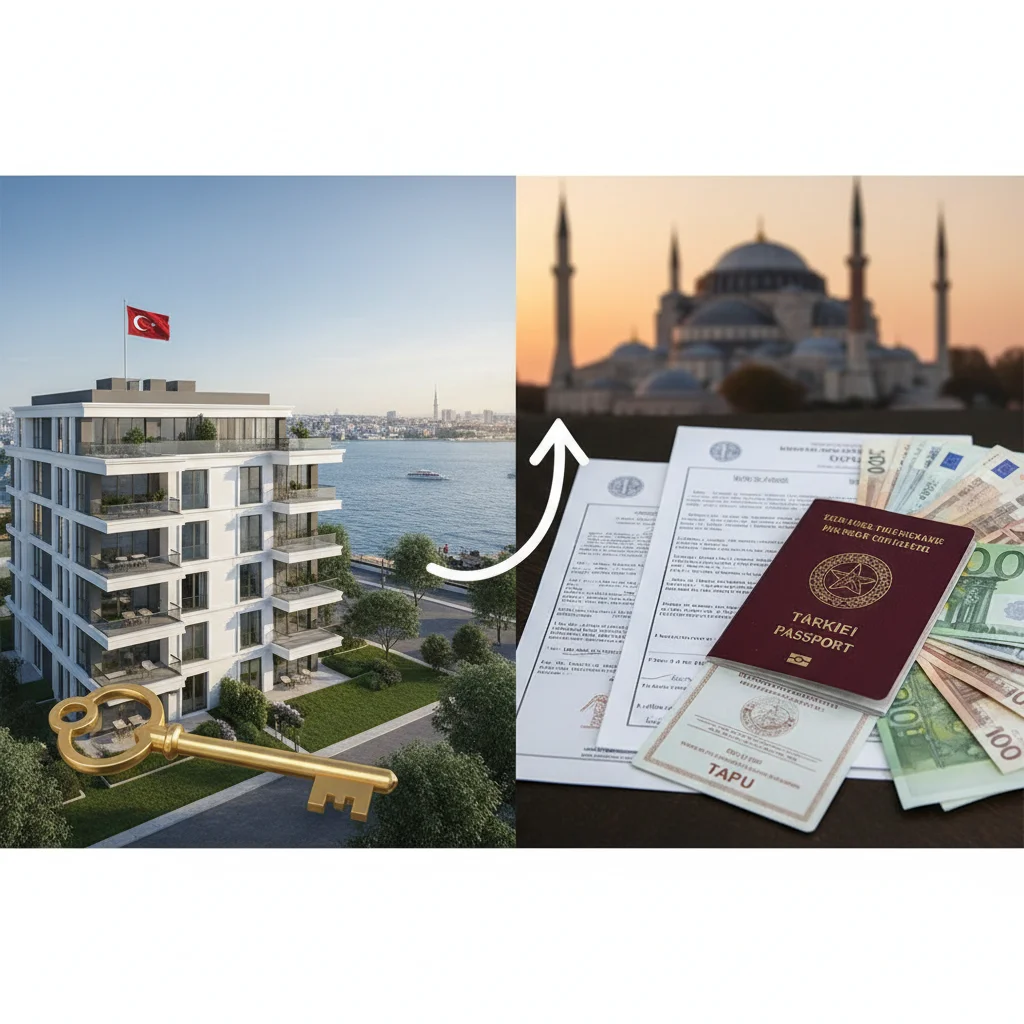
To qualify for a short-term real estate residence permit (Taşınmaz Amaçlı İkamet İzni) in 2026, the purchased property must serve as a residential home and carry an official Capital Markets Board (SPK)-licensed appraisal value of at least $200,000 USD. Furthermore, the property must be located in an "open" neighborhood where foreign resident quotas have not exceeded the government's 20% population cap.
What does this mean for someone hunting for a $150,000 villa in Bursa? You can still legally buy and own a $150,000 villa as a foreigner, rent it out, or use it for 90-day tourist visits within any 180-day window. However, a $150,000 property alone will not grant a long-term property-based residence permit. If residency is a priority, target villas in open Bursa neighborhoods whose official appraisal comfortably clears $200,000.
Turkey's Citizenship by Investment program remains anchored at a minimum real estate investment of $400,000 USD in 2026, accompanied by a mandatory three-year holding commitment recorded on the title deed ("şerh"). Importantly, regulations allow investors to combine multiple properties to reach the $400,000 requirement, provided all units are appraised accurately, purchased through compliant banking channels, and registered with the appropriate non-sale annotation.
Purchasing two or three reasonably priced villas in high-demand Bursa growth corridors—rather than one oversized residence—has become a favored strategy among pragmatic citizenship applicants because smaller villas rent faster and sell more easily once the three-year lockup expires.
Looking for the best real estate investment opportunity in Istanbul?
We help you choose the right property based on your budget and goals
Get a Free Consultation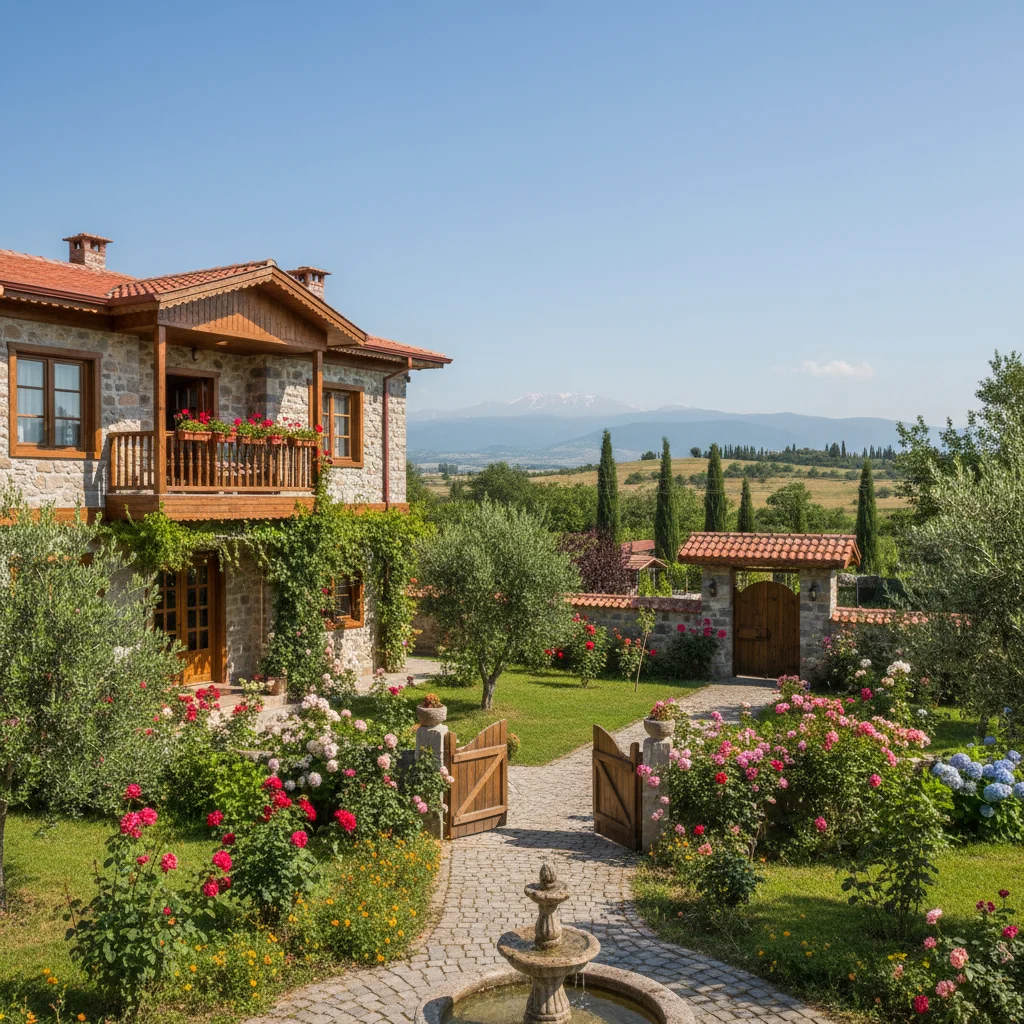
Purchasing real estate in Turkey is remarkably efficient once your documentation is organized, typically concluding within one to three weeks from deposit to key handover. Follow this disciplined workflow to protect your capital:
Budgeting solely for the sticker price of a cheap villa is a classic mistake. Factor in approximately 6% to 7.5% above the purchase price for official transaction costs, legal support, and utility subscriptions.
| Fee / Tax Category | Typical 2026 Rate or Estimate | Frequency | Notes for Buyers |
|---|---|---|---|
| Title Deed Transfer Fee (Tapu Harcı) | 4% of declared value | One-time | Legally split 2% buyer / 2% seller, though buyers often negotiate or pay 4% on discounts |
| Land Registry Circulating Capital Fee | ~$150 – $350 USD (varies by municipality) | One-time | Higher standard multiplier applies to foreign transactions (Döner Sermaye) |
| SPK Appraisal & Sworn Translation | $450 – $750 USD combined | One-time | Mandatory for foreign buyers at Tapu |
| Real Estate Agency Commission | 2% + VAT (KDV) | One-time | Regulated cap for licensed Turkish brokerages |
| DASK Earthquake Insurance | $60 – $140 USD | Annual | Required for Tapu transfer and utility activation |
| Annual Municipal Property Tax (Emlak Vergisi) | 0.1% – 0.2% of municipal tax value | Annual | Paid in two installments (May & November) |
| Compound Maintenance (Aidat) | $40 – $150 USD / month | Monthly | Applies only to villas inside managed gated communities |
Buying an affordable villa is only half the equation; managing the asset efficiently determines your real net return. Unlike compact city-center studio apartments, detached and semi-detached villas require proactive seasonal care and thoughtful tenant selection.
Bursa supports two distinct rental models, each suited to different districts:
If you plan to hold your Bursa villa while living overseas, choosing a villa inside a managed "site" simplifies ownership enormously. Site managers handle exterior lighting, gate security, shared pool chemistry, and common garden landscaping. For fully standalone villas, hiring a reputable local property management firm is essential to oversee winter pipe draining, roof gutter cleaning after autumn winds, boiler servicing, and timely payment of municipal taxes.
In real estate, the cheapest asset is not always the most liquid. A $140,000 villa in an isolated village with poor roads may sit on the market for a year when you decide to sell. Conversely, a $185,000 to $250,000 villa located within 10 minutes of a BursaRay metro station, an international school, or the Mudanya ferry terminal appeals to both Turkish middle-class buyers (who represent over 90% of Bursa's transaction volume) and international investors. Prioritizing domestic Turkish buyer appeal is your strongest safeguard for a profitable exit.
Bargain hunting attracts opportunistic listings. Watch carefully for these five red flags before transferring a single deposit:
Foreign nationals face strict legal limits on purchasing agricultural land without an approved agricultural investment project, and properties located inside designated military or security zones are off-limits. Stick to properties with official residential zoning ("konut imarlı") and clear urban or municipal residential title deeds.
Both options have clear merits depending on your risk tolerance. Off-plan villas from established Bursa developers offer staged payment plans, brand-new 2026 energy standards, and launch discounts—though you must verify land ownership and bank guarantees. Resale villas around 3 to 7 years old allow you to inspect finished build quality, confirm an existing Iskan, meet future neighbors, and generate rental income from day one.
Bursa generally costs 10% to 20% more than Sakarya (Sapanca/Adapazarı) for comparable villa square footage, and roughly matches or slightly undercuts prime coastal Yalova. However, Bursa's diversified economy of over 3.2 million residents, superior healthcare facilities, metro transit, and year-round corporate tenant base give it significantly stronger liquidity and resale resilience than smaller neighboring provinces.
While foreign nationals are legally permitted to apply for Turkish bank mortgages (typically up to 50% loan-to-value), high Turkish Lira borrowing rates in 2026 make local mortgages unattractive for most international buyers. Cash purchases—or developer-financed installment plans paid in foreign currency or indexed milestones—remain far more economical.
Finding cheap villas in Bursa in 2026 is entirely achievable when you focus on emerging suburban corridors rather than cutting corners on legal documentation. By targeting zoned, earthquake-compliant twin and detached homes in areas like Kayapa, Hasanağa, inland Mudanya, Kestel, or İznik, buyers capture generous space, four-season livability, and proximity to Istanbul at prices that remain compelling across the Mediterranean basin. Pair thorough due diligence—SPK valuations, Iskan verification, and compliant banking transfers—with realistic yield projections, and Bursa can serve as both a serene personal retreat and a durable cornerstone of your Turkish real estate portfolio.
Note: Market data, district profiles, and regulatory insights in this article were sourced from Emlak Platform, Mbany Real Estate, and Massar Istanbul.