US Dollar - USD
- Turkish Lira - TRY
- US Dollar - USD
- Euro - EUR
- Pound sterling - GBP
- Russian Ruble - RUB
- Chinese Yuan - CNY
- Georgian lari - GEL
- Saudi Riyal - SAR
- UAE Dirham - AED
- Syrian Pound - SYP
Few emerging property markets have reshaped global wealth mobility over the past decade quite like Turkey. Sitting at the crossroads of Europe, the Middle East, and Central Asia, the country pairs deep domestic housing demand with one of the world's most accessible citizenship-by-investment frameworks. Yet entering the Turkish real estate sector in 2026 requires far more discipline than simply picking an apartment with a sea view. Regulatory tightening, stricter appraisal rules, evolving rental legislation, and shifting urban growth corridors mean that serious investors must approach every acquisition with clear financial and legal strategy.
Whether your goal is securing a second passport for your family, obtaining a long-term residence permit, or building a resilient foreign-currency rental portfolio, understanding how Turkish property law interacts with immigration policy is essential. Below is a thorough, practical roadmap covering everything from the $400,000 citizenship threshold and due diligence safeguards to tax structuring and post-purchase property management in 2026.
The Turkish housing market in 2026 looks noticeably more mature than the rapid, speculative boom years of the early 2020s. Monetary tightening, clearer foreign-buyer compliance checks, and standardized valuation controls have filtered out short-term speculators, leaving a market driven by fundamental housing needs, corporate relocations, tourism inflows, and long-horizon international capital.
Several structural forces continue to support property values across major Turkish metropolitan areas:
Looking for the best real estate investment opportunity in Istanbul?
We help you choose the right property based on your budget and goals
Get a Free Consultation
Turkey's Citizenship by Investment program remains the flagship magnet for international property buyers. Unlike European golden visa schemes that have been curtailed or converted into high-threshold fund mandates, Turkey still permits direct freehold real estate ownership as a straightforward route to full citizenship—provided every procedural detail is executed accurately.
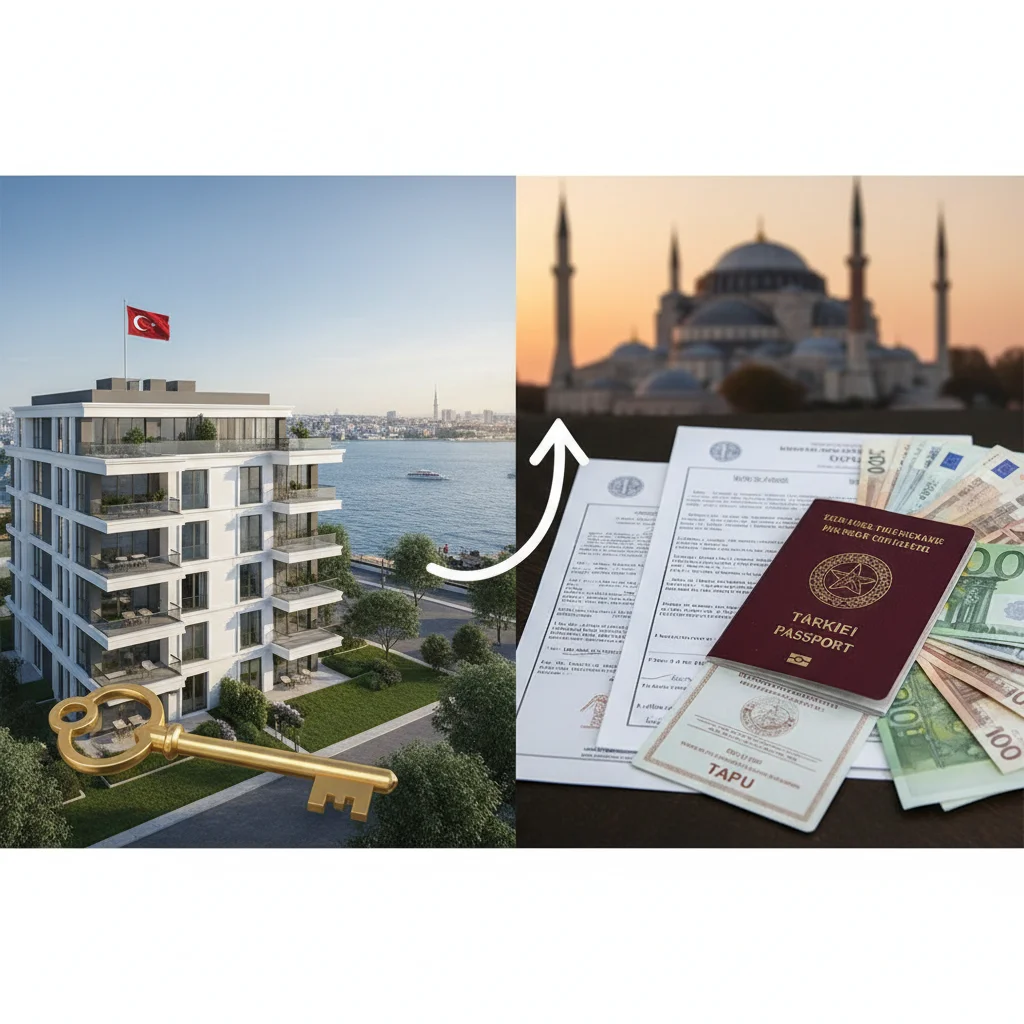
To qualify for Turkish citizenship through property acquisition in 2026, an investor must purchase real estate valued at a minimum of $400,000 USD (or the equivalent in foreign currency). Crucially, eligibility is not based solely on the asking price quoted by a developer or seller; it is determined by the lowest figure among three benchmarks: the official government-licensed valuation report, the declared Title Deed transfer price, and the bank-verified payment amount.
To eliminate artificial price inflation and safeguard transaction transparency, Turkish authorities enforce two non-negotiable financial controls prior to Title Deed transfer.
First, an independent appraisal report must be commissioned through the central allocation system regulated by the Capital Markets Board of Turkey. Buyers can no longer hand-pick a friendly appraiser; the system assigns a licensed firm automatically to ensure an impartial market valuation.
Second, the buyer must obtain a Foreign Exchange Purchase Certificate. Before the final transfer at the Land Registry Office, the purchase funds must be converted from foreign currency (such as USD, EUR, or GBP) into Turkish Lira through a Turkish bank, which sells the foreign currency to the Central Bank of the Republic of Turkey and issues the official conversion receipt. Without this document, the Land Registry will not process a foreign buyer's purchase—even for non-citizenship transactions.
A single qualifying $400,000 investment covers the primary applicant, their legal spouse, and all dependent children under the age of 18 at the time of application. Adult children over 18 and parents are not included under the same file and must qualify independently if they seek citizenship or residency. From the completion of the Title Deed transfer and receipt of the Certificate of Conformity from the Ministry of Environment, Urbanization and Climate Change, full citizenship approval and passport issuance typically take between four and eight months.
| Program Feature | Citizenship by Real Estate Investment | Property-Based Residence Permit |
|---|---|---|
| Minimum Property Value | $400,000 USD (official appraisal and bank transfer) | $200,000 USD (official appraisal and Title Deed value) |
| Mandatory Holding Period | 3 years (recorded on Title Deed) | Must retain ownership while renewing permit |
| Physical Stay Requirement | None required before or after approval | Periodic entry and continuity rules apply for renewals |
| Family Coverage | Spouse and children under 18 receive full citizenship | Spouse and dependent children receive family residency |
| Closed Neighborhood Restrictions | Exempt from foreign-density district caps | Subject to closed neighborhood quotas (20% cap) |
| Work Authorization | Full right to work and run a business as a citizen | Does not grant automatic work rights without separate permit |
Not every buyer wants or needs immediate citizenship. For retirees, digital professionals, and investors deploying smaller capital allocations, Turkey offers a renewable short-term Residence Permit tied directly to property ownership.
Under current 2026 rules, foreign buyers seeking a residence permit through real estate must purchase a residential property valued at least $200,000 USD, verified by an official appraisal report and reflected on the Title Deed. Properties priced below this threshold no longer qualify for a property-based residence permit, making it vital for mid-budget buyers to verify values carefully before signing any reservation form.
Equally important is Turkey's neighborhood quota policy. Across Istanbul, Antalya, and several coastal municipalities, districts where foreign residents exceed 20% of the local population are closed to new first-time residence permit registrations. While citizenship buyers are exempt from these neighborhood closures, buyers targeting the $200,000 residency route must confirm with the Provincial Directorate of Migration Management that the exact street and neighborhood are open for registration before committing capital.
Investors who maintain continuous legal residency in Turkey for five years (subject to strict limits on days spent outside the country) may apply for citizenship via ordinary naturalization, while eight years of uninterrupted residency opens eligibility for an indefinite long-term residence permit.
Because Turkey spans vastly different climates and economic ecosystems, choosing the right city—and the right micro-district within that city—determines both your annual cash flow and your exit liquidity when the three-year citizenship holding period ends.
Istanbul absorbs the largest share of institutional and private foreign capital. On the European side, districts such as Basaksehir, Bahcelievler, Zeytinburnu, and the Maslak–Sariyer business corridor attract strong corporate and family demand due to metro access, private hospitals, and international schools. On the Asian side, Kadikoy, Atasehir (home to the Istanbul International Financial Center), and coastal Kartal and Pendik stand out for urban transformation projects and steady local buyer liquidity. Choosing an area with deep domestic Turkish demand is the smartest safeguard for future resale after year three.
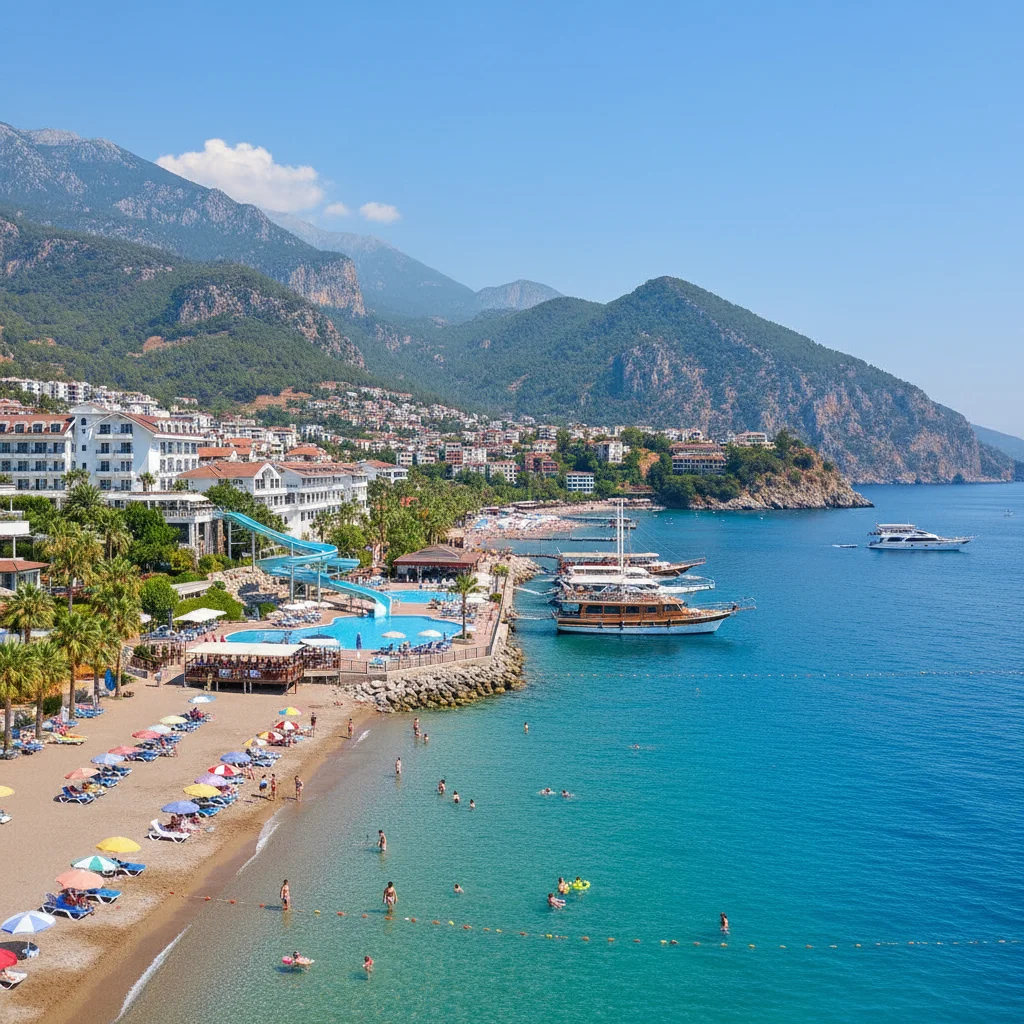
Antalya continues to serve as Turkey's premier Mediterranean residential hub, drawing European, Middle Eastern, and Eurasian residents year-round. Districts like Konyaalti, Lara, and Dosemealti combine resort-grade master-planned compounds with access to international schools and an expanding airport. Further east, Alanya offers lower entry prices and villa communities overlooking the Taurus Mountains, though investors must pay close attention to closed-neighborhood boundaries if residency rather than citizenship is the objective.
Ankara is increasingly appreciated by yield-focused investors for its lower price-to-rent ratios, diplomatic and civil-service tenant stability, and steady municipal growth in districts like Cankaya. Izmir attracts lifestyle buyers and domestic tech professionals seeking Aegean coastal living in Urla, Cesme, and Karsiyaka. Meanwhile, the Bodrum peninsula remains Turkey's trophy-asset market, where branded residences and private sea-view villas in Yalikavak and Turkbuku trade in hard currency and cater to ultra-high-net-worth buyers.
| Region | Primary Investor Profile | Typical Citizenship-Grade Entry | Expected Gross Rental Yield | Core Market Driver |
|---|---|---|---|---|
| Istanbul (Central and Financial Hubs) | Capital appreciation and liquidity-focused buyers | $400,000 – $950,000+ | 4.5% – 6.5% | Corporate jobs, finance center, metro expansion |
| Antalya (Lara and Konyaalti) | Lifestyle buyers and seasonal/annual landlords | $400,000 – $700,000 | 5.5% – 7.5% | Year-round tourism, expat community, climate |
| Ankara (Cankaya and Gölbasi) | Conservative cash-flow investors | $400,000 – $600,000 | 6.0% – 8.0% | Government, universities, stable domestic tenants |
| Izmir and Bodrum | Long-term wealth preservation and luxury buyers | $500,000 – $2,500,000+ | 4.0% – 6.0% | Coastal scarcity, branded resorts, domestic prestige |
Navigating a cross-border real estate purchase becomes straightforward when you follow a disciplined, transparent sequence. Experienced buyers either visit Turkey for three to five business days or appoint a specialized independent real estate lawyer through a notarized Power of Attorney issued at a Turkish consulate abroad.
Looking for the best real estate investment opportunity in Istanbul?
We help you choose the right property based on your budget and goals
Get a Free Consultation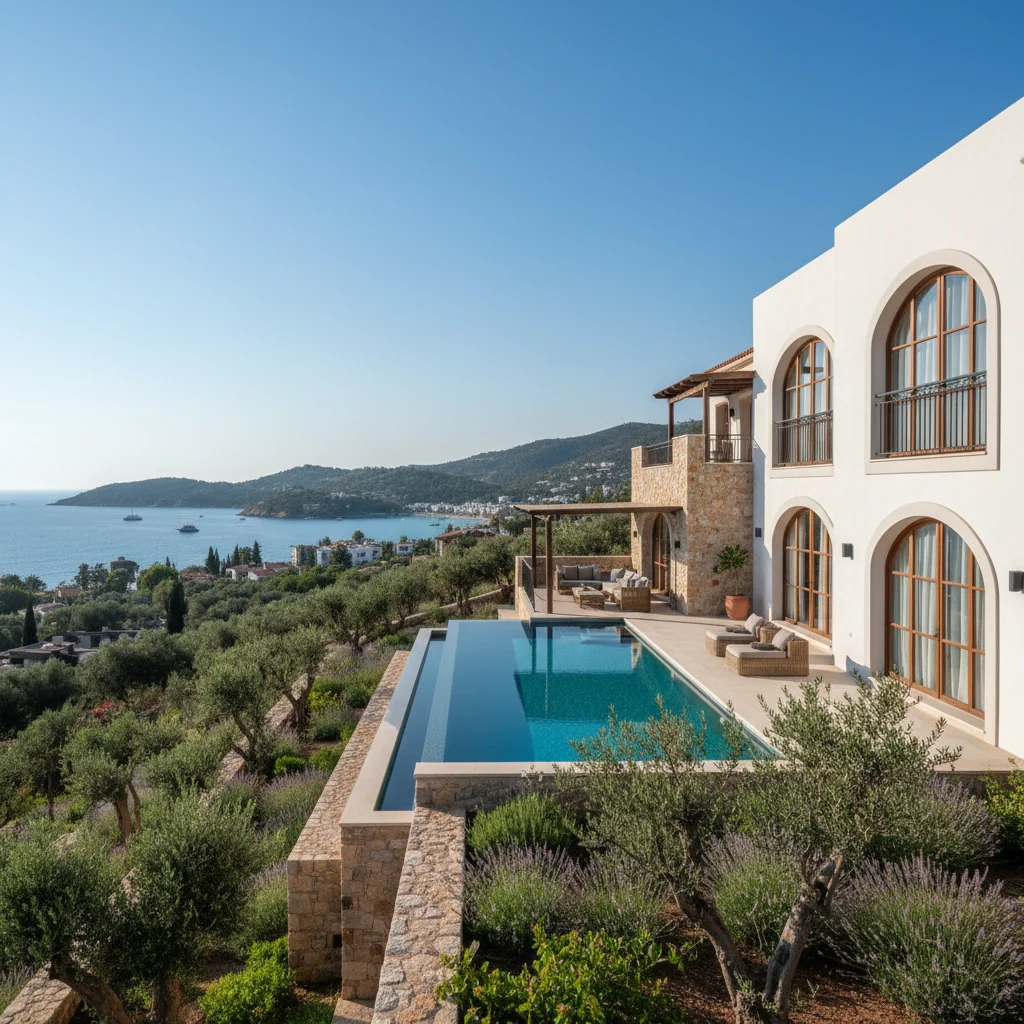
Headline property prices in Turkey do not tell the whole financial story. Prudent buyers model both upfront acquisition expenses and recurring annual ownership taxes so that net returns match expectations.
Annual municipal property tax ranges from 0.1% to 0.2% for residential properties (higher in metropolitan municipalities) and is calculated on the municipal tax valuation rather than retail market value. Rental income earned in Turkey must be declared annually each March, with deductions available either via actual documented expenses or a flat-rate lump-sum deduction method under progressive income tax brackets.
On the exit side, Turkey offers an attractive long-term tax incentive for individual owners: if an individual holds a property for at least five full years from the Title Deed date before selling, capital gains on the sale are generally exempt from personal income tax. Selling immediately after the three-year citizenship mark, by contrast, subjects net real gains (adjusted for domestic producer inflation indexing) to progressive capital gains taxation.
| Cost Item | Typical Rate or Range (2026) | Timing and Notes |
|---|---|---|
| Title Deed Transfer Tax | 4% of declared value | Paid once at Land Registry transfer |
| VAT on New Developments | 0% (if exempt) or 10% – 20% | Foreign non-residents may qualify for 0% exemption |
| Independent Legal Due Diligence | 1% – 1.5% of purchase price | Recommended to avoid title or developer risks |
| Appraisal, Notary, and Registry Fees | $1,200 – $2,500 USD equivalent | Covers official valuation, translation, and deed fees |
| Annual Municipal Property Tax | 0.1% – 0.2% of municipal value | Payable annually in two installments |
| Mandatory Earthquake Insurance | $100 – $350 USD annually | Required before Title Deed and utility activation |
Buying the right asset is only half the equation; how you manage the property over the subsequent three to five years determines whether it becomes a compounding income generator or an administrative headache. Turkey's rental market has undergone major regulatory shifts that every landlord must respect.
For years, many overseas buyers relied on unmanaged short-term holiday rentals to chase double-digit seasonal yields. That landscape changed fundamentally with the enforcement of Turkey's short-term tourism rental law. Under these rules, renting a residential property for periods shorter than 100 days at a time requires an official Tourism Purpose Rental Permit from the Ministry of Culture and Tourism. More importantly, obtaining that permit in an apartment building requires the unanimous written consent of 100% of all unit owners in the building.
Operating unlicensed short-term rentals exposes owners to severe administrative fines starting in the thousands of dollars per unit and escalating rapidly upon repeat inspection. Consequently, in 2026, investors targeting short-term income should focus exclusively on licensed aparthotels, high-residence developments whose management plans explicitly permit short-term leasing, or detached villas where obtaining consent is straightforward. Standard urban apartments are overwhelmingly best positioned for 12-month long-term leases.
With the expiration of Turkey's temporary 25% residential rent-increase cap, annual lease renewals for long-term residential tenants have returned to the statutory benchmark based on the 12-month average of the Turkish Consumer Price Index. This restoration of market-linked indexing has brought landlords and tenants back into healthier equilibrium, reducing disputes and improving net yields.
To protect your asset under Turkish tenancy law, professional property managers implement strict pre-lease protocols:
For foreign owners residing outside Turkey, self-managing tenants across time zones and language barriers quickly erodes returns. Reputable property management firms handle tenant placement, bilingual contract drafting, periodic physical inspections, maintenance oversight, building association meetings, and annual Turkish rental tax declarations. When evaluating a management partner, insist on transparent fee structures (typically 8% to 12% of collected monthly rent for long-term management), itemized repair approvals, and direct bank payouts to your personal account.
Most legal disappointments experienced by foreign buyers in Turkey stem from preventable shortcuts taken during the excitement of a viewing trip. Guard your capital by avoiding these frequent mistakes:
Yes. Once the three-year non-sale annotation period registered on your Title Deed has elapsed, you may apply to remove the restriction and sell the property to any buyer—Turkish or foreign—without affecting your Turkish citizenship or that of your spouse and children. Be mindful, however, that holding the property for five full years provides substantial capital gains tax advantages upon sale.
Yes. Turkish law fully permits dual and multiple citizenships. Turkey does not require you to renounce your existing nationality, nor does it notify your home government automatically upon approval, though you should always verify whether your home country imposes restrictions on holding a second passport.
No. Under citizenship-by-investment regulations, the net equity paid by the investor—excluding any bank loan or mortgage financing—must equal at least $400,000 USD. Properties encumbered with a developer mortgage or bank loan that reduces your net paid equity below $400,000 will not qualify until the debt is cleared.
Foreign nationals who acquire Turkish citizenship as adults aged 22 or older are generally exempt from compulsory Turkish military service. Male children who acquire citizenship as minors alongside their parents may become subject to standard rules or paid-exemption provisions once they reach conscription age, depending on residency status and prevailing legislation.
Entering the Turkish real estate market in 2026 rewards buyers who pair lifestyle or citizenship ambitions with institutional-grade due diligence. By focusing on well-connected districts backed by strong domestic demand, insisting on transparent valuations and bank-verified transfers, accounting accurately for closing and tax obligations, and delegating ongoing leasing to licensed property managers, international investors can secure both global mobility and durable real-asset performance.
Note: Market data, regulatory requirements, and investment insights presented in this article were sourced from Emlak Platform, Mbany Real Estate, and Massar Istanbul.