US Dollar - USD
- Turkish Lira - TRY
- US Dollar - USD
- Euro - EUR
- Pound sterling - GBP
- Russian Ruble - RUB
- Chinese Yuan - CNY
- Georgian lari - GEL
- Saudi Riyal - SAR
- UAE Dirham - AED
- Syrian Pound - SYP
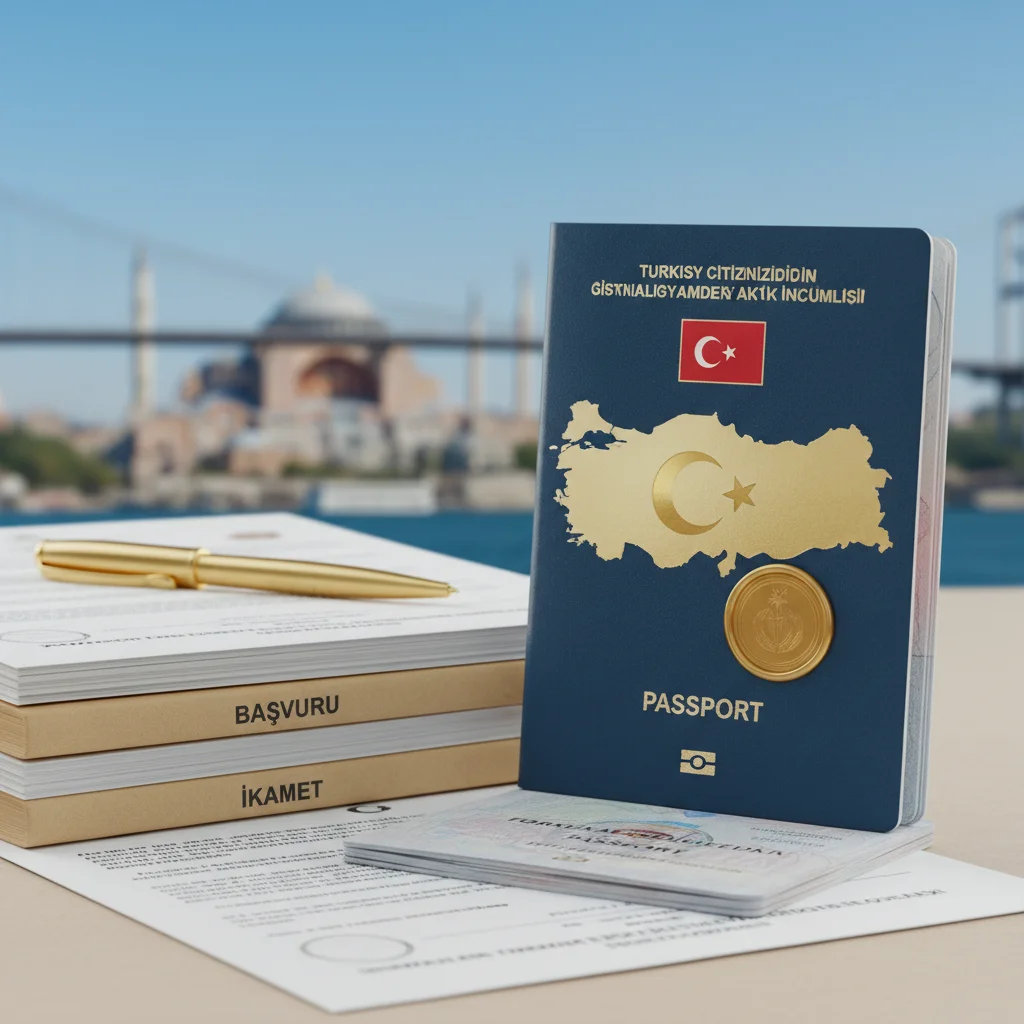
Obtaining Turkish citizenship remains one of the most accessible and strategically rewarding residency-to-citizenship pathways in the world in 2026. Positioned at the crossroads of Europe, Asia, and the Middle East, Turkey offers foreign investors not only a dynamic real estate market with strong rental yields, but also direct access to a G20 economy, modern healthcare and educational infrastructure, and visa-free or visa-on-arrival travel to more than 110 destinations worldwide.
Unlike many European golden visa programs that have tightened restrictions or eliminated real estate options altogether, Turkey continues to welcome international property buyers through a well-regulated legal framework. Under current regulations, eligible applicants who invest in qualifying Turkish real estate or financial assets can obtain full citizenship for themselves, their spouse, and their dependent children under the age of 18—typically within four to eight months of completing the qualifying investment.
Equally important, Turkey permits dual citizenship, meaning investors do not have to renounce their existing nationality unless required by their home country. Furthermore, there is no minimum physical residency requirement before or after naturalization, nor is there a Turkish language proficiency exam for investment-based applicants.
While purchasing real estate is overwhelmingly the most popular route for obtaining Turkish citizenship, Turkish nationality law outlines multiple qualifying investment mechanisms overseen by relevant ministries. Understanding each route allows investors to align their citizenship goal with their broader wealth preservation and portfolio diversification strategy.
The flagship pathway requires acquiring one or more residential or commercial properties in Turkey with a combined official valuation and declared purchase price of at least $400,000 USD. Investors must commit to holding the property for a minimum of three years, verified through an official annotation placed on the Title Deed (Tapu).
Key rules governing the real estate route in 2026 include:
For investors who prefer liquid assets or business expansion over direct property ownership, Turkish law provides four additional capital routes:
| Investment Pathway | Minimum Threshold (2026) | Mandatory Holding Period | Supervising Authority |
|---|---|---|---|
| Real Estate Acquisition | $400,000 USD | 3 Years | Ministry of Environment, Urbanization and Climate Change |
| Turkish Bank Deposit | $500,000 USD | 3 Years | Banking Regulation and Supervision Agency (BDDK) |
| Government Bonds | $500,000 USD | 3 Years | Ministry of Treasury and Finance |
| REIF / VCIF Fund Shares | $500,000 USD | 3 Years | Capital Markets Board (SPK) |
| Fixed Capital Investment | $500,000 USD | 3 Years | Ministry of Industry and Technology |
| Employment Creation | 50 Turkish Employees | Ongoing Verification | Ministry of Labor and Social Security |
Looking for the best real estate investment opportunity in Istanbul?
We help you choose the right property based on your budget and goals
Get a Free Consultation
Successfully obtaining Turkish citizenship through property investment requires precise sequencing. Even minor administrative errors—such as transferring funds in an improper currency format or overlooking a municipal lien—can delay approval by months. Below is the structured legal roadmap followed by seasoned real estate attorneys and advisors in 2026.
Before executing any transaction, the primary applicant must obtain a Turkish Tax Identification Number (Vergi Numarası). This can be completed swiftly online via the Interactive Tax Office portal or in person at a local tax office using a valid passport. Once the tax number is issued, opening an account at a reputable Turkish bank enables transparent international wire transfers, currency conversion, and utility setup. If the applicant cannot travel immediately, a certified Power of Attorney (POA) granted to a licensed Turkish lawyer allows all preliminary banking and administrative steps to proceed remotely.
Selecting an eligible asset goes beyond aesthetics and location. Your legal counsel should conduct comprehensive due diligence at the General Directorate of Land Registry and Cadastre (Tapu ve Kadastro Genel Müdürlüğü) to confirm the absence of mortgages, judicial seizures, tax debts, or military-zone restrictions. Once cleared, an official valuation report is requested through the centralized electronic valuation system (GABİM), ensuring impartial verification that the property meets or exceeds the $400,000 threshold.
Under Turkish Central Bank regulations, foreign buyers must convert their foreign currency (USD, EUR, or GBP) into Turkish Lira through a Turkish bank prior to the Title Deed transfer. The bank issues a Foreign Exchange Purchase Certificate (Döviz Alım Belgesi, commonly known as DAB), which links the buyer’s identity, passport number, and exact USD equivalent directly to the property purchase. All payments must flow strictly from the buyer’s bank account to the seller’s bank account—cash transactions are strictly disqualified.
At the Land Registry office, the property title is transferred to the buyer, and a three-year no-sale restriction (Şerh) is formally inscribed onto the deed.
Following title registration and receipt inspection, the Land Registry issues the Certificate of Conformity (Uygunluk Belgesi). Armed with this certificate, the applicant applies for a specialized short-term Investor Residency Permit under Article 31/1-j of the Law on Foreigners and International Protection. Unlike standard residency applications, investor residency permits are processed rapidly and do not require extensive physical presence in Turkey during biometrics or review—a major advantage for global executives.
Once the investor residency permit is granted, the full family dossier is submitted to the Provincial Directorate of Population and Citizenship Affairs. Background and security screenings are conducted by national authorities. Upon presidential sign-off, applicants receive their citizenship confirmation letter and can schedule appointments—either in Turkey or at a Turkish consulate abroad—to collect their Turkish National ID cards (Kimlik) and biometric Turkish passports.
Preparing apostilled or consulate-attested civil documents early prevents bottlenecks later in the process. Core documentation includes:
Smart investors treat citizenship not as a sunk cost, but as a value-enhancing byproduct of a sound real estate acquisition. In 2026, Turkey’s property market is characterized by strong urban regeneration demand, expanding transit networks, and sustained rental inflation in major metropolitan hubs. Choosing the right asset class and micro-location ensures capital preservation during the three-year lock-up period and attractive exit liquidity afterward.
Istanbul remains the undisputed epicenter for high-value real estate investment. European-side districts such as Şişli, Beşiktaş, Sarıyer, Kağıthane, and Başakşehir attract corporate tenants, university students, and affluent families, while Asian-side neighborhoods like Kadıköy, Ataşehir, and Üsküdar—bolstered by the Istanbul International Finance Center—offer resilient long-term appreciation and lower vacancy rates.
Antalya stands out as Turkey’s premier Mediterranean coastal market. Areas like Lara, Konyaaltı, and Döşemealtı enjoy year-round international demand from European, CIS, and Middle Eastern buyers, delivering seasonal short-term rental premiums alongside stable long-term leases.
Ankara, the nation’s capital, appeals to conservative investors seeking steady, recession-resistant yields driven by diplomatic missions, government institutions, and major universities in districts like Çankaya. Meanwhile, Izmir continues to draw lifestyle-oriented investors and tech professionals to Aegean hubs such as Alsancak, Bornova, and Çeşme.
Ready-to-move properties with an active Habitation License (İskan) allow immediate title transfer, immediate rental income generation, and swift Certificate of Conformity issuance. Conversely, off-plan developments from Tier-1 Turkish developers often offer lower entry pricing per square meter and potential capital appreciation upon project completion. However, buyers choosing off-plan units for citizenship must ensure the entire $400,000 valuation is paid upfront rather than through post-handover installments, and verify that the developer holds valid construction permits and land ownership.
| City | Typical Gross Rental Yield (2026) | Primary Demand Drivers | Top Investment Districts |
|---|---|---|---|
| Istanbul | 5.5% – 7.5% | Corporate headquarters, finance center, metro expansion, universities | Beşiktaş, Kadıköy, Ataşehir, Kağıthane, Başakşehir |
| Antalya | 6.0% – 8.5% | Tourism, international expat community, coastal lifestyle | Konyaaltı, Lara, Muratpaşa, Belek |
| Ankara | 6.5% – 8.0% | Diplomatic sector, civil service, major academic institutions | Çankaya, Gölbaşı, Yenimahalle |
| Izmir | 5.0% – 6.8% | Tech sector, maritime trade, Aegean second-home market | Alsancak, Karşıyaka, Urla, Çeşme |
Looking for the best real estate investment opportunity in Istanbul?
We help you choose the right property based on your budget and goals
Get a Free Consultation
Not every foreign buyer begins their Turkish journey ready to commit $400,000 immediately. Understanding Turkey’s tiered residency framework allows families to test neighborhoods, enroll children in international schools, and structure assets before transitioning into full citizenship.
Foreigners who purchase residential property valued below the $400,000 citizenship threshold may still qualify for a property-based residency permit (Taşınmaz Amaçlı İkamet İzni), provided the property meets current minimum valuation rules (currently $200,000 USD across Turkey for new property-based residency applications) and is located in an open neighborhood not subject to foreign-density caps. Short-term residency permits are typically issued for one to two years and can be renewed as long as ownership and valid health insurance are maintained.
It is critical to check neighborhood quota restrictions overseen by the Presidency of Migration Management (Göç İdaresi Başkanlığı). Certain high-density districts across Istanbul and Antalya remain closed to new first-time residency registrations, although these neighborhood closures do not block the $400,000 Citizenship by Investment route when applying under investor residency rules.
Foreign nationals who reside legally and continuously in Turkey for eight uninterrupted years on standard residency permits may apply for a Long-Term Residency Permit (Süresiz İkamet), granting indefinite stay without renewal fees. Alternatively, residency holders who later upgrade their real estate portfolio to reach the $400,000 valuation threshold can pivot directly into the fast-track Citizenship by Investment program, bypassing the standard five-year naturalization residency clock entirely.
Once your Turkish citizenship is granted, responsible asset stewardship ensures your investment remains compliant, profitable, and tax-efficient throughout the three-year retention window and beyond.
When the three-year commitment annotation is placed on your Title Deed, the property cannot be sold or transferred to another party during that 36-month window. Violating this pledge—or attempting to cancel the annotation prematurely—triggers automatic revocation of citizenship. However, owners retain full rights to occupy the property, renovate it, or lease it to residential or commercial tenants to earn ongoing rental income. Once the 36 months expire, the annotation can be formally removed at the Land Registry, freeing the investor to sell the property—including to another foreign buyer—without impacting their Turkish nationality.
For overseas landlords residing outside Turkey, partnering with a licensed property management company removes the day-to-day friction of tenant vetting, lease drafting under the Turkish Code of Obligations, maintenance oversight, and building fee (Aidat) payments. Investors eyeing lucrative short-term holiday rentals on platforms such as Airbnb must comply strictly with Turkey’s Tourism Purpose Rental Law. Under these rules, renting a residential unit for periods shorter than 100 days requires obtaining an official Tourism Rental Permit from the Ministry of Culture and Tourism, securing unanimous written consent from all co-owners in the apartment building, and registering guest identities in the police notification system (KBS). In many urban residential towers, long-term annual corporate leases provide cleaner regulatory compliance and predictable net cash flow.
Budgeting accurately for transaction and holding costs prevents surprises at closing. Buyers should account for the following statutory expenses in 2026:
Even experienced international buyers occasionally encounter avoidable obstacles in Turkey’s real estate market. Protecting your investment begins with sidestepping these common mistakes:
From the date of Title Deed registration and DAB issuance, securing the Certificate of Conformity, Investor Residency Permit, and final citizenship approval typically takes between four and eight months, depending on document readiness and background verification timelines.
Yes. A single qualifying $400,000 real estate investment covers the main applicant, their legal spouse, and all unmarried dependent children under the age of 18 at the time of application. Adult children aged 18 or older generally require their own separate qualifying investment unless they are medically certified as dependent due to a permanent disability.
No. There is zero minimum stay requirement before obtaining citizenship and zero residency requirement afterward. Applicants are also exempt from any Turkish language or civics examination.
If you use a mortgage loan, only the net equity paid directly out of pocket (the total purchase price minus the mortgage amount) counts toward the $400,000 citizenship threshold. Therefore, most applicants fund the qualifying $400,000 portion entirely in cash equity via bank transfer.
The $400,000 threshold is locked in on the date of your Currency Exchange Certificate (DAB) and Title Deed transfer. Subsequent fluctuations in the USD/TRY exchange rate do not affect your eligibility or jeopardize your citizenship status during the three-year holding period.
Investors who acquire Turkish citizenship through the $400,000 investment program are generally exempt from mandatory military service if they are over the age of 22 at the time of naturalization, or if they can document prior military service or exemption in their country of origin under reciprocal rules. Confirming individual eligibility with legal counsel prior to filing is recommended for male dependents nearing adulthood.
Obtaining Turkish citizenship in 2026 offers a rare combination of speed, family inclusivity, dual-nationality flexibility, and tangible real estate ownership in a thriving transcontinental market. By conducting thorough due diligence, adhering strictly to Central Bank and Land Registry procedures, and aligning your purchase with high-demand urban locations, you can secure a valuable second passport alongside a resilient income-producing asset.
Note: Information for this guide was sourced from Emlak Platform, Mbany Real Estate, and Massar Istanbul.