US Dollar - USD
- Turkish Lira - TRY
- US Dollar - USD
- Euro - EUR
- Pound sterling - GBP
- Russian Ruble - RUB
- Chinese Yuan - CNY
- Georgian lari - GEL
- Saudi Riyal - SAR
- UAE Dirham - AED
- Syrian Pound - SYP
Istanbul has long carried a reputation for sky-high waterfront mansions along the Bosphorus, yet the city's sprawling geography tells a far more accessible story. For international buyers, retirees, and yield-focused investors in 2026, finding cheap villas in Istanbul does not mean settling for poor construction or isolated farmland. Instead, it requires looking toward rapidly maturing suburban municipalities, transit-connected coastal corridors, and outer-ring green zones where land values remain a fraction of central European districts.
Over the past few years, shifting lifestyle preferences and major infrastructure expansion have reshaped Istanbul's residential map. Families moving away from dense high-rise apartments in Sisli, Besiktas, or Kadikoy have pushed demand outward toward gated townhouse compounds and detached garden homes. At the same time, tightened residency rules and evolving citizenship regulations mean that foreign buyers must approach budget-friendly villas with sharp financial and legal discipline. This guide breaks down the most realistic neighborhoods, current 2026 pricing benchmarks, ownership costs, and practical strategies for buying and managing an affordable villa in Istanbul.
In 2026, value-oriented real estate in Istanbul sits at an interesting intersection of urban expansion and steady rental demand. While luxury villas in Sariyer, Bebek, or Beykoz routinely command several million dollars, outer districts on both the European and Asian sides still offer modern three- to five-bedroom villas starting well below what a standard two-bedroom apartment costs in major Western European capitals.
Several structural factors explain why buyers are targeting entry-level and mid-market villas this year:
Looking for the best real estate investment opportunity in Istanbul?
We help you choose the right property based on your budget and goals
Get a Free Consultation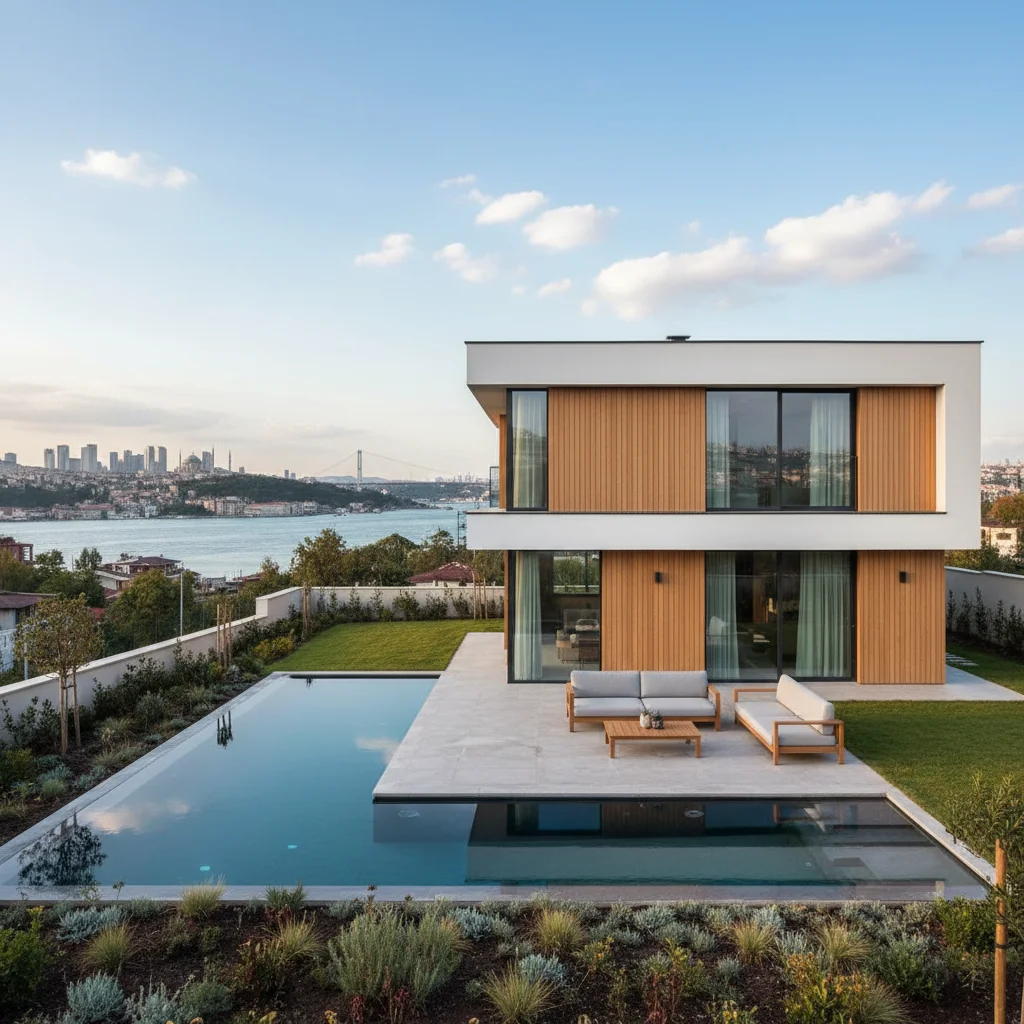
Understanding Istanbul's micro-markets is the single biggest factor in avoiding overpaying. What counts as "cheap" varies sharply depending on proximity to the Bosphorus, sea views, compound amenities, and building age. Below are the primary districts offering genuine value for villa buyers in 2026.
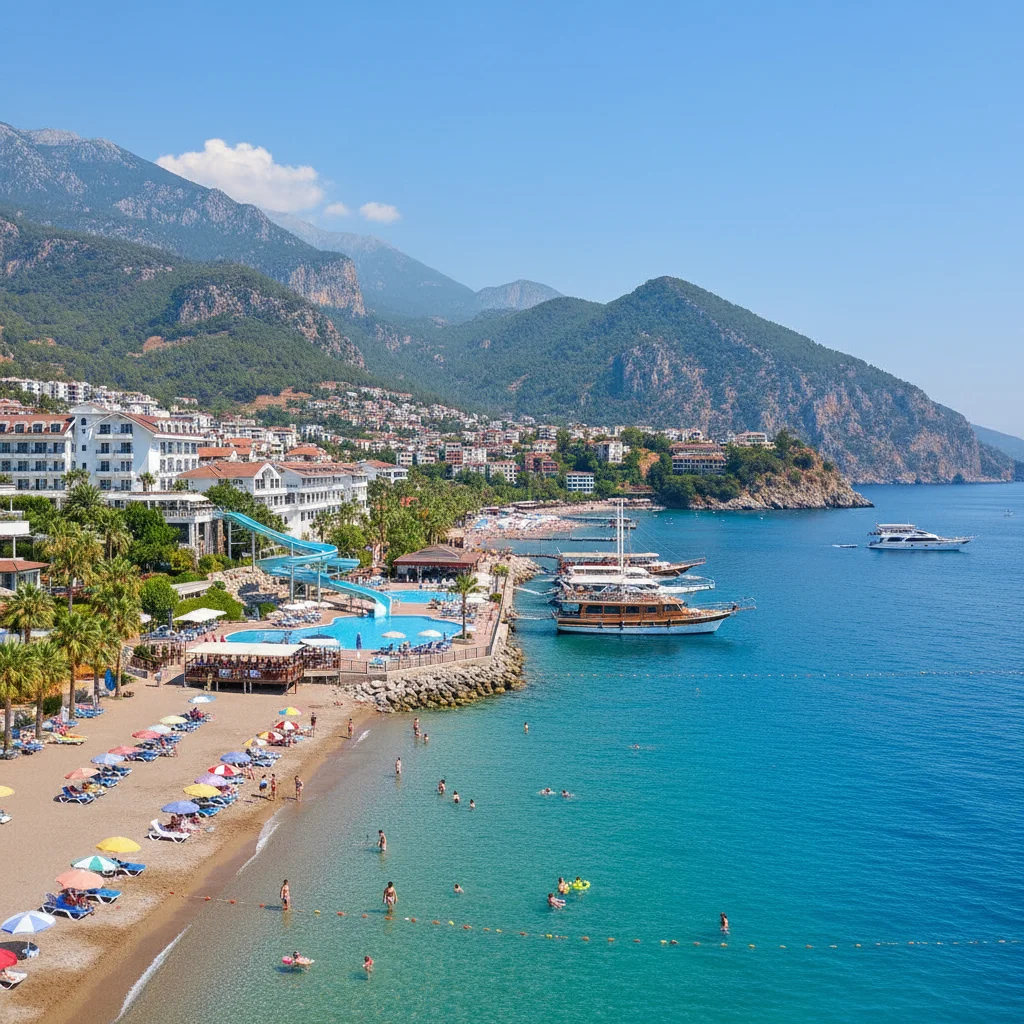
Located on the far western edge of the European side along the Marmara Sea, Silivri consistently offers the lowest entry prices for standalone villas in Istanbul Province. Historically favored by Istanbulites for weekend retreats, Silivri has transitioned into a permanent residential market with private schools, marinas, hospitals, and shopping centers.
Buyers can still locate older resale villas or compact newly built duplexes in neighborhoods like Selimpasa, Gumusyaka, and Mimar Sinan at prices rarely seen elsewhere in the city. Many properties come with 300 to 500 square meters of private garden space, making them popular with families seeking quiet living and pet-friendly outdoor areas. Commuting to central Istanbul takes 60 to 90 minutes via the E-5 or TEM highways, so Silivri suits remote workers, retirees, and seasonal landlords better than daily downtown office commuters.
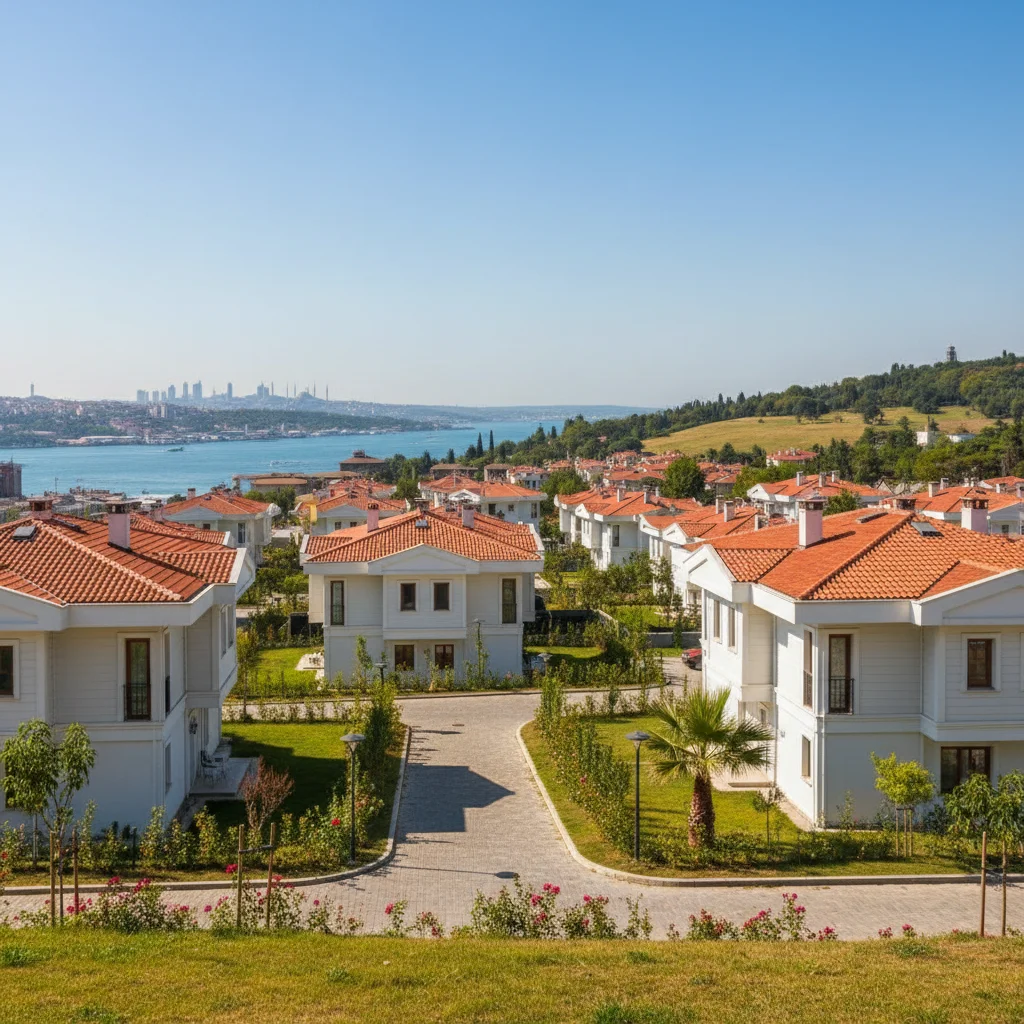
Just east of Silivri, Buyukcekmece bridges affordability and urban convenience. Centered around a scenic bay and a large freshwater lake, the district features a well-established promenade, international schools, exhibition centers, and quality healthcare facilities. Neighborhoods such as Mimaroba, Sinanoba, Kumburgaz, and Karaagac host hundreds of villa compounds ranging from modest twin villas to upscale architectural estates.
While hilltop luxury mansions overlooking the lake fetch premium sums, older triplex villas and smaller semi-detached townhouses a few streets back from the shoreline remain remarkably attainable in 2026. Buyukcekmece also enjoys strong liquidity because domestic buyers actively seek homes here year-round.
Beylikduzu is rarely considered "remote" anymore, thanks to the Metrobus rapid transit line, wide tree-lined boulevards, and massive parks such as Yasam Vadisi (Valley of Life). Most of Beylikduzu consists of modern apartment complexes, yet pockets of Gurpinar, Sahil, and Kavakli contain low-rise villas and garden duplexes priced competitively compared to inner-city neighborhoods.
For investors prioritizing rental yield and easy resale, Beylikduzu stands out. Vacancy rates are low, property management services are abundant, and tenants appreciate walking access to public transport, coastal marinas, and commercial hubs.
Situated north of Basaksehir and directly adjacent to Istanbul Airport, Arnavutkoy has experienced rapid transformation over the past decade. Because large swaths of the district remain newly zoned or semi-rural, land costs remain substantially lower than in neighboring Basaksehir or Eyupsultan.
Developers in Arnavutkoy frequently launch gated low-rise projects and off-plan villa communities featuring installment payment plans. Buyers willing to purchase during early construction phases—after verifying developer track records and construction permits—can secure modern smart-home villas at below-market rates with clear medium-term capital appreciation potential.
Catalca covers the largest geographic footprint of any Istanbul district, stretching northwest toward the Black Sea and Thrace. It is overwhelmingly green, dotted with forests, agricultural valleys, and quiet villages. If your priority is maximum square footage and privacy at a minimal price per square meter, Catalca delivers.
However, buyers must exercise extra caution here. Much of Catalca consists of agricultural or protected watershed land rather than standard residential zoning. Always verify that any villa carries full residential zoning and an official habitation license rather than being an unpermitted structure built on farmland.
Istanbul's Asian side generally commands higher baseline prices for detached homes, particularly in Kadikoy, Uskudar, and Beykoz. Yet moving northeast toward Cekmekoy and coastal Sile reveals accessible alternatives:
Real estate prices in Istanbul fluctuate according to construction quality, proximity to water or metro stations, land plot size, and whether the property sits inside a serviced security compound. The table below summarizes realistic 2026 market benchmarks for entry-level and budget-friendly villas across key districts.
| District | Side | Typical Entry Price (2026 USD) | Average Built Area | Best Suited For | Estimated Gross Yield |
|---|---|---|---|---|---|
| Silivri | European | $165,000 - $280,000 | 160 - 240 sqm | Retirees, budget detached living, garden lovers | 4.5% - 6.0% |
| Catalca | European | $180,000 - $320,000 | 180 - 300 sqm | Large plots, privacy, nature retreats | 4.0% - 5.2% |
| Arnavutkoy | European | $210,000 - $360,000 | 170 - 250 sqm | Off-plan growth, airport professionals | 5.2% - 6.5% |
| Buyukcekmece | European | $240,000 - $420,000 | 190 - 280 sqm | Family living, coastal lifestyle, resale balance | 5.0% - 6.3% |
| Beylikduzu (Gurpinar/Kavakli) | European | $260,000 - $440,000 | 180 - 260 sqm | Commuters, high-liquidity rental portfolios | 5.5% - 6.8% |
| Sile | Asian | $220,000 - $390,000 | 160 - 250 sqm | Holiday retreats, Black Sea tourism rentals | 5.0% - 6.5% |
| Cekmekoy (Outer Zones) | Asian | $310,000 - $480,000 | 200 - 290 sqm | Forest living, Asian-side corporate tenants | 4.8% - 6.0% |
Not every low price tag represents a bargain. Experienced Istanbul real estate advisors separate genuine value from hidden liabilities by inspecting why a property sits below the neighborhood average.
Many affordable "villas" marketed in Beylikduzu, Buyukcekmece, and Cekmekoy are actually twin villas (ikiz villa) or row townhouses inside gated communities. Sharing one structural wall lowers construction and land costs by 20% to 35% compared to fully detached homes on independent plots. For most buyers, a twin villa inside a managed compound is the smarter choice: you gain 24-hour security, shared pools, landscaping, and lower maintenance bills while preserving private entrances and gardens.
Turkey overhauled its seismic building codes significantly after 1999 and again in 2018. Older villas built in the 1980s or 1990s in Silivri or Buyukcekmece often trade at steep discounts. While some are structurally solid, others suffer from concrete carbonation, damp basements, or outdated plumbing. Always budget for an independent structural engineering inspection if purchasing a villa built before 2005, or prioritize post-2018 construction reinforced with raft foundations and modern insulation.
When browsing online portals, treat listings priced 30% or more below comparable neighborhood properties with skepticism. Common culprits include:
Looking for the best real estate investment opportunity in Istanbul?
We help you choose the right property based on your budget and goals
Get a Free Consultation
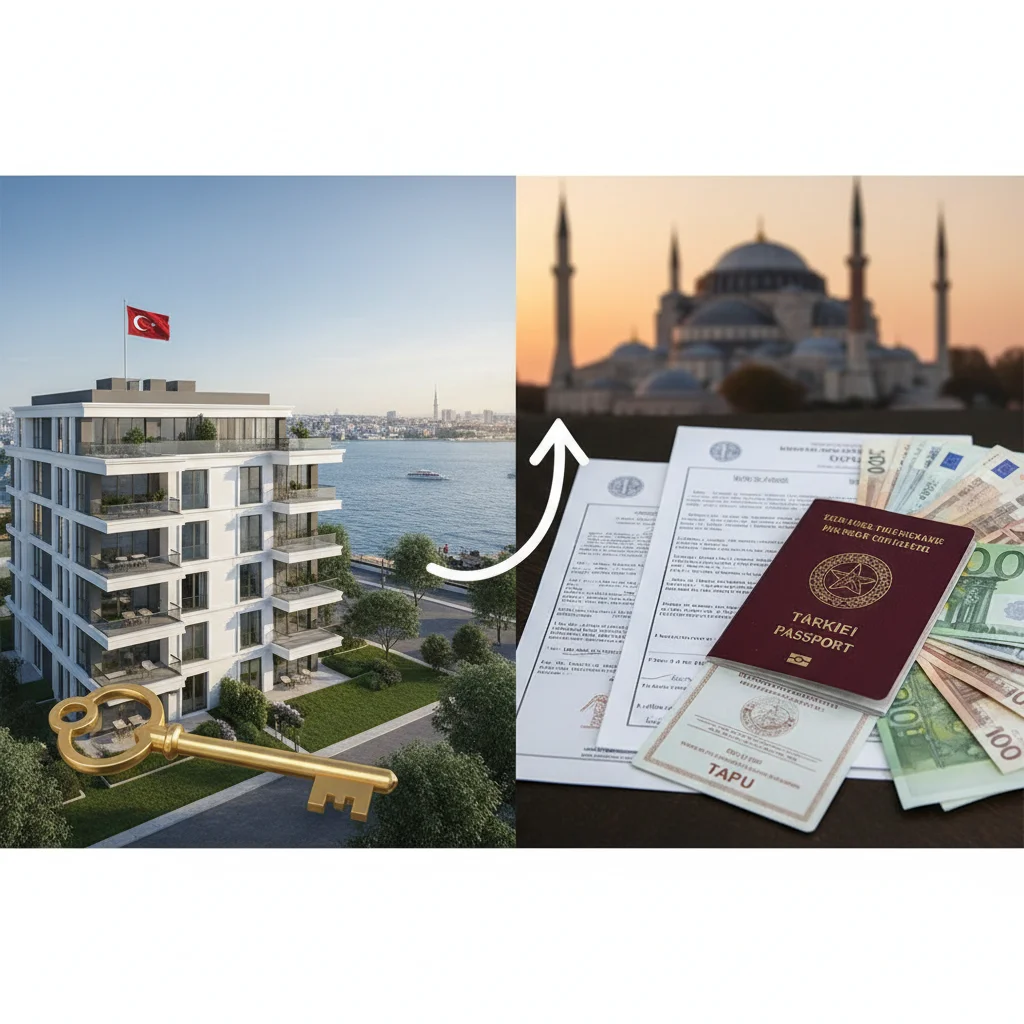
For international buyers, purchasing an affordable villa in Istanbul frequently ties into immigration planning. Knowing how 2026 residency and citizenship thresholds interact with lower-priced properties prevents costly miscalculations.
Foreign nationals buying residential real estate for residency purposes must meet strict valuation and geographic criteria:
Turkey's Citizenship by Investment program grants passports to eligible investors, their spouses, and unmarried children under 18 when acquiring real estate worth at least $400,000 USD and committing to hold the asset for three years.
Interestingly, budget-conscious villa investors often utilize a multi-property strategy here. Instead of buying a single $400,000+ villa, you can purchase two $210,000 townhouses—say, one in Arnavutkoy and another in Buyukcekmece—provided all properties carry residential title deeds, pass independent SPK-licensed appraisals confirming a combined value above $400,000, and have the three-year non-sale annotation placed on their Tapus simultaneously. Payments must flow transparently through Turkish banks accompanied by a Foreign Exchange Purchase Certificate (Döviz Alım Belgesi - DAB).
| Program Type | Minimum Real Estate Value | Holding Period | Closed Neighborhood Check Required? | Key Documentation |
|---|---|---|---|---|
| Real Estate Residence Permit | $200,000 USD (Appraised & Declared) | Duration of residency | Yes (Critical in Istanbul) | Tapu, SPK Appraisal, DASK, Open-Mahalle Check |
| Turkish Citizenship by Investment | $400,000 USD (Single or Combined) | 3 Years (Annotated on Tapu) | No (Citizenship is exempt from Ikamet quotas) | Tapu, DAB Certificate, SPK Appraisal, Conformity Letter |
Turkey's property transfer system is comparatively fast—often concluding within one to two weeks for ready resale properties—provided paperwork is prepared properly. Follow these sequential steps to protect your capital:
When calculating your true budget for a cheap villa in Istanbul, set aside roughly 5% to 7% above the negotiated purchase price to cover transaction fees and initial setup costs. Note that Turkish banks rarely extend attractive mortgages to non-resident foreigners at competitive rates, so most international buyers purchase either in cash or through interest-free developer installment plans (typically 30% to 50% down payment over 12 to 36 months on new projects).
| Expense Category | Typical 2026 Cost | Frequency | Notes |
|---|---|---|---|
| Title Deed Transfer Tax (Tapu Harci) | 4% of declared property value | One-time at purchase | Legally split 2% buyer / 2% seller, though buyers often negotiate or cover full 4% in practice. |
| SPK Appraisal & Sworn Translation | $450 - $800 USD | One-time at purchase | Mandatory for foreign nationals buying real estate in Turkey. |
| Land Registry Circulating Capital Fee | $150 - $350 USD | One-time at purchase | Standard administrative fee charged by Tapu office (slightly higher for foreign buyers). |
| Legal & Due Diligence Fees | 1% - 1.5% (or flat fee) | One-time (Optional/Advised) | Essential when buying off-plan, resale standalone homes, or filing for citizenship. |
| Annual Municipal Property Tax (Emlak Vergisi) | 0.2% of municipal tax value | Annual | Calculated on municipal assessed value, usually far lower than market value. |
| Compound Maintenance Fee (Aidat) | $60 - $250 USD/month | Monthly | Applies to gated compounds with security, pools, and shared landscaping; zero for standalone homes. |
| DASK Earthquake Insurance | $40 - $120 USD/year | Annual | Mandatory for all residential units and utility connections. |
Once you acquire an affordable villa in Istanbul, maximizing your return—or simply keeping the property secure while living abroad—depends on choosing the right rental model and management setup.
Before assuming you can list a cheap villa on short-term vacation platforms for high summer returns, examine Turkey's Law No. 7464 on Short-Term Tourism Rentals. Any rental under 100 consecutive days requires a Tourism Residence Permit from the Ministry of Culture and Tourism, along with unanimous written consent from all co-owners if the villa belongs to a shared compound or multi-unit complex. Unlicensed short-term rentals carry steep administrative fines.
Consequently, most foreign owners of budget villas in Beylikduzu, Buyukcekmece, Arnavutkoy, and Cekmekoy achieve steadier net returns through standard 12-month unfurnished or furnished residential leases:
If you reside outside Turkey, attempting to self-manage a detached house or garden townhouse invites avoidable headaches. Reputable Istanbul property management firms typically charge 8% to 12% of collected rent (or a modest monthly retainer for vacant holiday homes) and handle:
Yes. Citizens of most countries can purchase residential villas and accompanying land plots up to 30 hectares nationwide, provided the property is not inside a restricted military or security zone. Note that if you purchase raw, unbuilt land without an existing home, Turkish law requires submitting a construction development project within two years.
Safety depends far more on soil composition and construction year than price tag. Northern zones such as Arnavutkoy, Cekmekoy, and parts of Catalca sit on firmer bedrock farther from the main Marmara Sea fault line than coastal districts like Avcilar or southern Buyukcekmece. Regardless of district, always demand soil survey records, building permits, and post-2007 or post-2018 structural compliance before buying.
Central apartments deliver quick liquidity and steady corporate tenant demand, whereas outer-ring villas often appreciate in sharp waves triggered by infrastructure milestones—such as a new metro station opening or road widening. Over a five- to seven-year horizon, well-located affordable villas in growth corridors like Arnavutkoy, Beylikduzu, and Sile have historically matched or outperformed saturated inner-city apartment yields.
Ready resale villas let you inspect actual build quality, test commute times, verify the Iskan certificate immediately, and collect rent from day one. Off-plan villas offer lower entry prices and developer installment plans without bank interest, making them attractive if you do not need immediate rental cash flow—provided you choose established developers and notarize your contract on the Tapu.
Finding cheap villas in Istanbul in 2026 is entirely achievable once you look past postcard districts and focus on functional suburban corridors. Whether your goal is securing a spacious family home in Buyukcekmece, tapping into airport-driven appreciation in Arnavutkoy, or assembling a two-villa portfolio that qualifies for Turkish citizenship, success hinges on disciplined due diligence. Verify zoning and habitation licenses, confirm neighborhood residency eligibility if you need an Ikamet, account for full closing costs, and partner with reliable property managers to protect your asset from afar.
Note: Market insights, regulatory details, and pricing benchmarks in this article were sourced from Emlak Platform, Mbany Real Estate, and Massar Istanbul.