US Dollar - USD
- Turkish Lira - TRY
- US Dollar - USD
- Euro - EUR
- Pound sterling - GBP
- Russian Ruble - RUB
- Chinese Yuan - CNY
- Georgian lari - GEL
- Saudi Riyal - SAR
- UAE Dirham - AED
- Syrian Pound - SYP
Cross-border capital deployment in Turkish real estate has transitioned from speculative residential buying into a sophisticated, institutional asset-allocation strategy. Entering 2026, foreign direct investment (FDI) into Turkish property reflects mature legal protocols, standardized valuation mechanisms, and an increasingly institutionalized secondary market. For global investors, family offices, and individual buyers seeking geographic diversification, Turkey continues to bridge Western institutional frameworks with emerging Eastern market growth dynamics.
The country's strategic position across the Bosphorus, coupled with comprehensive infrastructure modernizations such as high-speed rail corridors, expanding regional airports, and deep-sea logistical hubs, sustains steady demand across metropolitan and coastal property sectors. Whether the objective centers on securing a resilient rental yield, capital appreciation in master-planned regeneration zones, or obtaining alternative citizenship and residency rights, international purchasers navigate a mature regulatory landscape designed to safeguard foreign capital while ensuring macroeconomic stability.
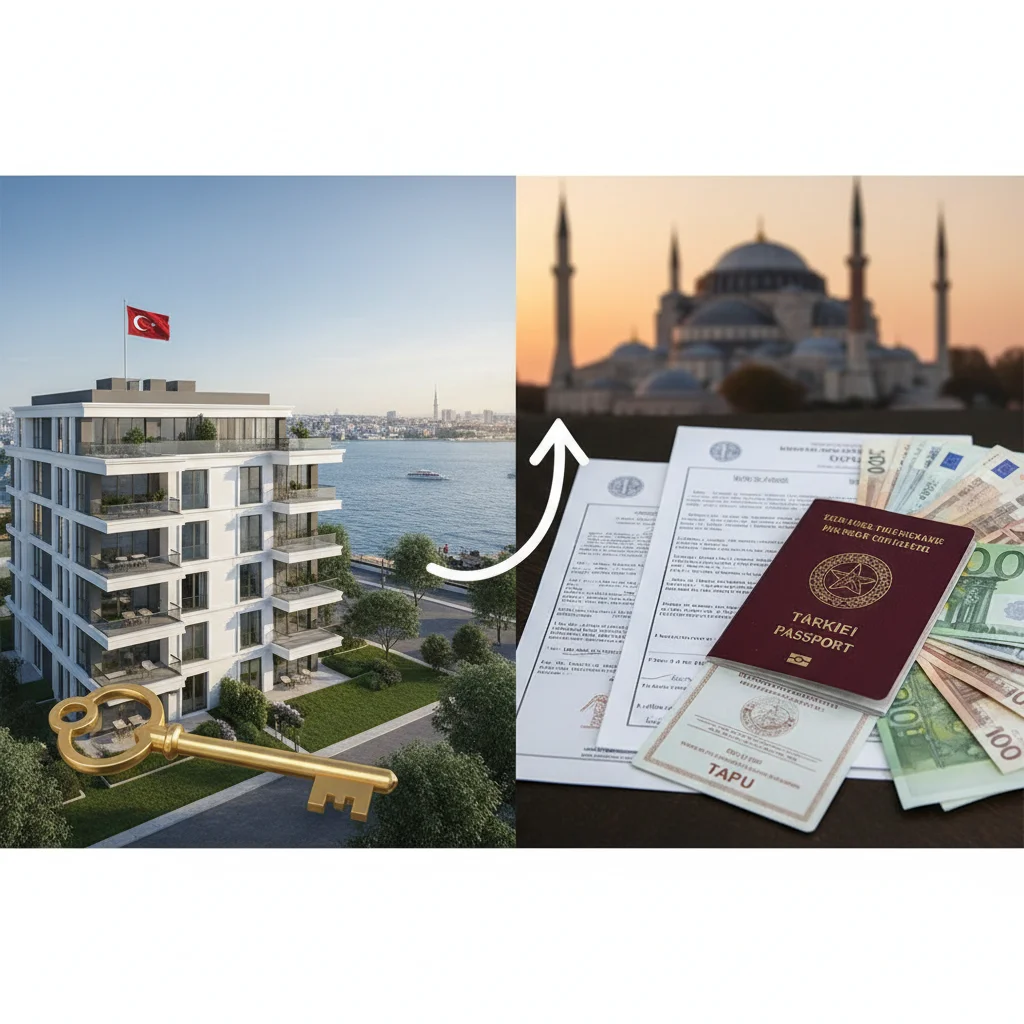
Foreign real estate ownership in Turkey operates under the landmark amendments to Article 35 of the Land Registry Law No. 2644. Enacted to dismantle historic reciprocity barriers, this statutory foundation permits citizens of more than 180 nations to acquire freehold title deeds (Tapu) across Turkish territory, subject to defined statutory ceilings.
While the Turkish market maintains an open-door posture toward international capital, the Directorate General of Land Registry and Cadastre (Tapu ve Kadastro Genel Müdürlüğü) enforces strict statutory parameters to preserve domestic territorial integrity:
Looking for the best real estate investment opportunity in Istanbul?
We help you choose the right property based on your budget and goals
Get a Free Consultation
The Turkish Citizenship by Investment Program represents one of the most operationally efficient economic citizenship routes globally. Through successive regulatory updates harmonized leading into 2026, the program balances national sovereign interests with streamlined investor immigration pathways.
Under current immigration decrees, the primary threshold for naturalization through real estate acquisition stands at a minimum statutory investment of $400,000 USD (or its equivalent in foreign currency cleared through the Central Bank of the Republic of Turkey). This threshold demands rigorous compliance:
Securing citizenship through real estate investment progresses through four distinct legal phases:
For international buyers seeking residency without committing to full citizenship acquisition, property ownership offers a stable immigration pathway through immovable property residence permits (Article 31/B of Law No. 6458 on Foreigners and International Protection).
Under standardized directives enforced nationwide, property purchased to qualify for an immovable property residence permit must command a minimum transaction and valuation price of $200,000 USD. This unified threshold applies across all 81 provinces, replacing fragmented historical benchmarks. The property must be classified strictly as residential and utilized primarily as the applicant's registered address of domicile. As long as title ownership is preserved and verifiable municipal utility records are maintained, this permit remains renewable annually or biennially, offering a stable foundation for long-term domestic life in Turkey.
Navigating the Turkish property acquisition pathway requires adherence to structured administrative steps. Bypassing statutory verification stages invites avoidable financial and legal exposure.
Prior to executing binding commercial commitments or transferring reservation deposits, foreign purchasers must assemble baseline financial identifiers:
Legal representation conducts comprehensive technical and administrative investigations at the relevant municipal cadastre office and planning departments:
The closing sequence moves swiftly once due diligence clears the subject asset:
Looking for the best real estate investment opportunity in Istanbul?
We help you choose the right property based on your budget and goals
Get a Free Consultation
Financial modeling for Turkish property investments must account for one-time transaction fees and ongoing fiscal obligations. Turkey remains among the most cost-efficient real estate transfer jurisdictions within the OECD, yet transparent budget projections are vital.
| Expense Category | Statutory Basis / Rate | Responsible Party | Settlement Timing |
|---|---|---|---|
| Title Deed Transfer Tax (Tapu Harcı) | 4% of assessed transaction value | Legally split 2% / 2% (often custom for buyer to pay 4%) | At point of deed transfer |
| Value Added Tax (KDV) | 1% to 20% (depending on property class/size) | Buyer (Exemptions apply for qualifying foreign capital) | Invoice generation / closing |
| Mandatory Valuation Report (SPK) | Standardized tariff (~$300 - $600 USD) | Buyer | Prior to title deed application |
| Land Registry Circulating Fund (Döner Sermaye) | State administrative fee (~$150 - $400 USD) | Buyer | At point of deed transfer |
| Legal Representation Retainer | 1% - 1.5% of asset value (or fixed fee) | Buyer | Retainer upon contract engagement |
| Certified Translation & Notarization | ~$200 - $500 USD total | Buyer | During document preparation |
| Compulsory Earthquake Insurance (DASK) | Actuarial scale based on square footage (~$40 - $120/year) | Owner | Annually recurring |
| Annual Municipal Property Tax (Emlak Vergisi) | 0.1% to 0.4% (metropolitan cities levy 0.2% - 0.4%) | Owner | Bi-annually (May and November) |
Under Article 13/i of the Value Added Tax Law, foreign individual investors and non-resident corporate entities purchasing newly developed real estate directly from construction developers can qualify for complete VAT exemption (saving between 1% and 20% on the acquisition price). To qualify, the buyer must satisfy specific non-residency criteria, import funds in foreign currency via verifiable banking pathways, and maintain ownership of the underlying asset for a minimum of three years following title conveyance.
Yield performance, capital preservation profiles, and tenant profiles vary significantly across Turkey's diverse regional submarkets. Institutional-grade strategies distinguish sharply between dynamic urban regeneration centers and high-end coastal vacation corridors.
As the cultural and financial center of Turkey, Istanbul commands the bulk of foreign commercial transactions. Investment strategies here split into distinct profiles:
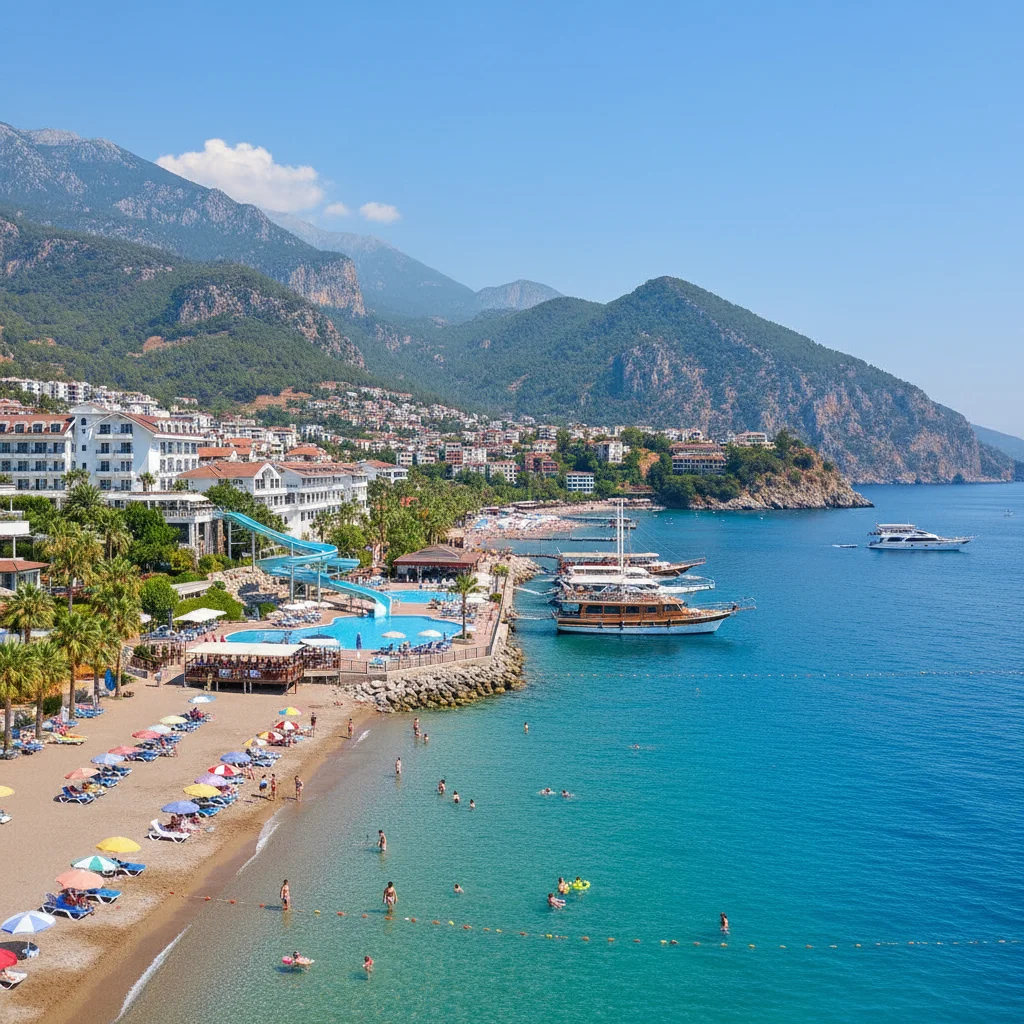
Antalya maintains its position as the premier leisure investment market in Turkey. Sustained international tourism inflows generate robust foundations for short-term and corporate executive rentals in master-planned communities across Konyaaltı, Lara, and modern expanding suburbs like Kepez and Döşemealtı. Gross holiday-rental models frequently cross 7.5% to 9.0% yields, though operators must navigate short-term operational licensing frameworks.
Bodrum, along with exclusive pockets of the Aegean coastline (including Çeşme and Urla), commands global luxury capital. Characterized by branded residential resorts (such as Mandarin Oriental, Ritz-Carlton, and Aman developments), ultra-high-net-worth real estate in Yalıkavak, Göltürkbükü, and Türkbükü acts as an inflation-hedged dollarized asset class. Annual rental returns in these locations compress toward 3.5% to 5.0%, but sustained multi-year capital appreciation balances lower yields.
Ankara, Turkey's administrative capital, provides a stable, government-anchored rental dynamic with lower entry valuations per square meter than Istanbul. The presence of diplomatic missions, universities, and defense-industry campuses creates a steady tenant pool. Izmir, positioned on the Aegean coast, attracts discerning domestic corporate transfers away from Istanbul alongside tech-focused remote-work communities, supporting consistent 5.5% to 6.8% annual rental returns.
Managing income-producing properties in Turkey requires active compliance with administrative regulations, particularly regarding tenant protections and short-term hospitality licensing.
The regulatory framework governing residential rentals for tourism purposes (Law No. 7464) places short-term rentals (stays under 100 consecutive days, such as those through Airbnb or VRBO) under clear operational parameters:
Long-term tenancies (leases exceeding one year) are regulated through the Turkish Code of Obligations (Türk Borçlar Kanunu). Key structural considerations include:
Securing risk-adjusted returns in Turkey requires active mitigation of construction, legal, and counterpart hazards. Sophisticated investors apply strict underwriting filters to screen out under-capitalized developments.
While purchasing off-plan property yields advantageous entry pricing and phased milestone-driven payment programs, it introduces construction delivery risk. Investors can mitigate structural delivery hazards by adopting clear safeguards:
Earthquake safety remains a primary design consideration across the country. Turkey’s modern Seismic Building Code enforces some of the world's strictest structural engineering standards for new developments:
Turkey's foreign property investment landscape balances growth opportunities with regulatory structure. The market's historic appeal—rooted in strategic location, demographic growth, and citizenship acquisition—is reinforced by clear institutional frameworks: standardized valuation systems, transparent foreign currency conversion channels, and established municipal oversight.
For international buyers and portfolio managers, success depends on thorough preparation: engaging experienced legal counsel, adhering to official Central Bank currency exchange protocols, selecting well-capitalized developers, and matching asset selections to clear financial goals. Whether investing in central Istanbul offices, Antalya rental portfolios, or coastal resort properties, Turkey remains an appealing market for globally diversified, cross-border real estate capital.
Market insights, legal framework updates, and statistical data sourced in collaboration with regional market authorities and reference publications: