US Dollar - USD
- Turkish Lira - TRY
- US Dollar - USD
- Euro - EUR
- Pound sterling - GBP
- Russian Ruble - RUB
- Chinese Yuan - CNY
- Georgian lari - GEL
- Saudi Riyal - SAR
- UAE Dirham - AED
- Syrian Pound - SYP
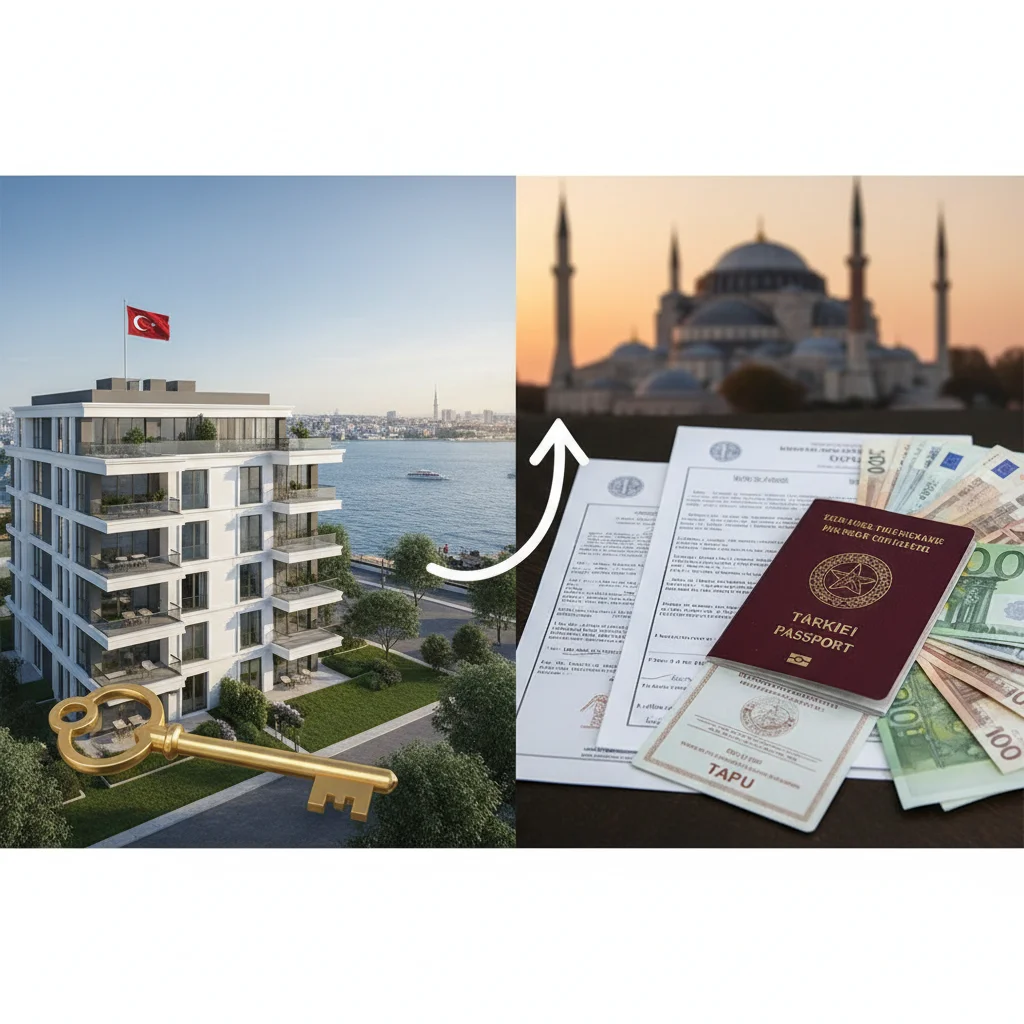
Turkey remains one of the most accessible and strategically positioned citizenship-by-investment destinations in 2026. Sitting at the crossroads of Europe, the Middle East, and Central Asia, the country offers foreign buyers a rare combination: freehold property ownership in a major G20 economy, direct eligibility for a Turkish passport for the investor and immediate family members, and strong long-term rental and capital appreciation fundamentals.
Unlike pure donation-based citizenship programs in the Caribbean or passive bond schemes elsewhere, the Turkish model converts your capital into a tangible, income-generating asset. Once the mandatory three-year holding period expires, you retain full freedom to sell the property, repatriate the proceeds, or continue holding it for steady rental income—without losing your citizenship.
However, navigating the 2026 regulatory landscape requires precision. Tightened appraisal oversight, strict foreign-currency conversion rules under the Central Bank of the Republic of Turkey (CBRT), and clear distinctions between citizenship-eligible properties and standard residency purchases mean that every step must be structured properly before a deposit is paid.
Looking for the best real estate investment opportunity in Istanbul?
We help you choose the right property based on your budget and goals
Get a Free Consultation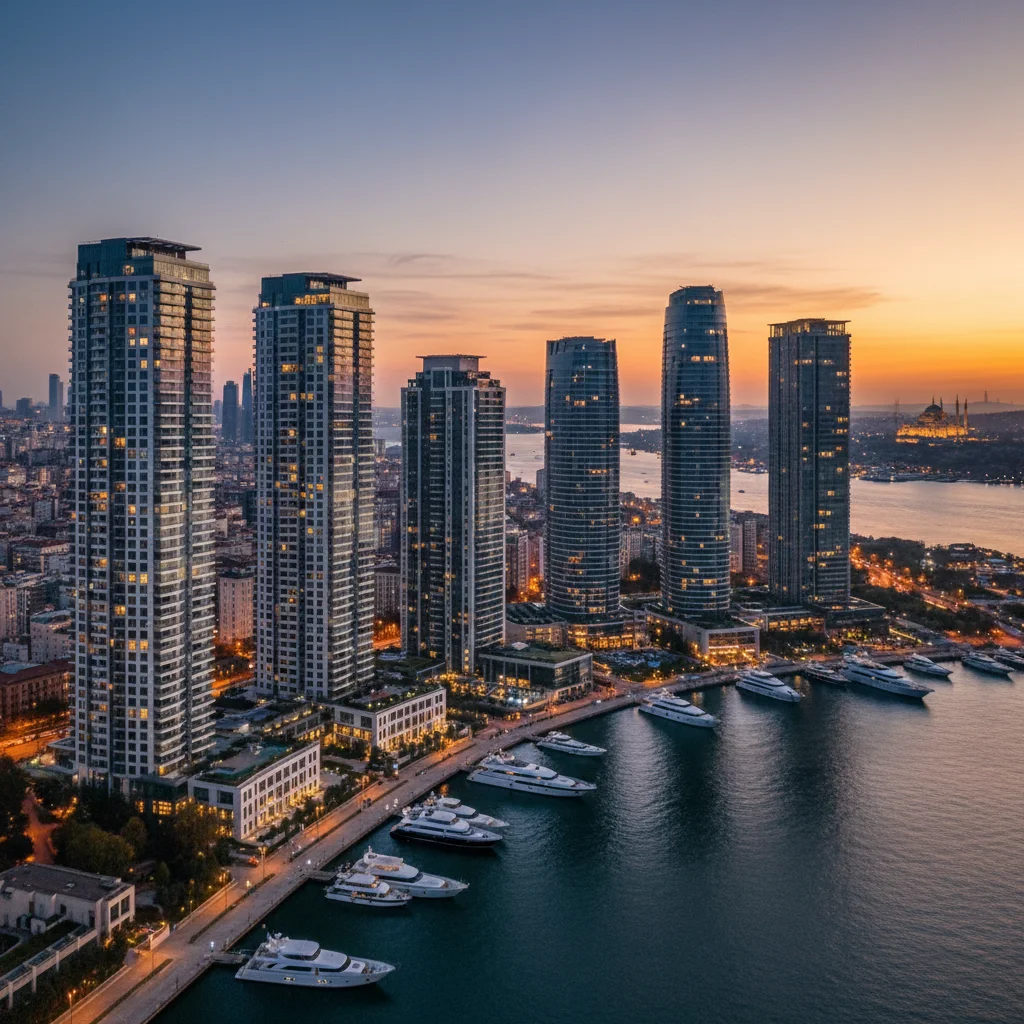
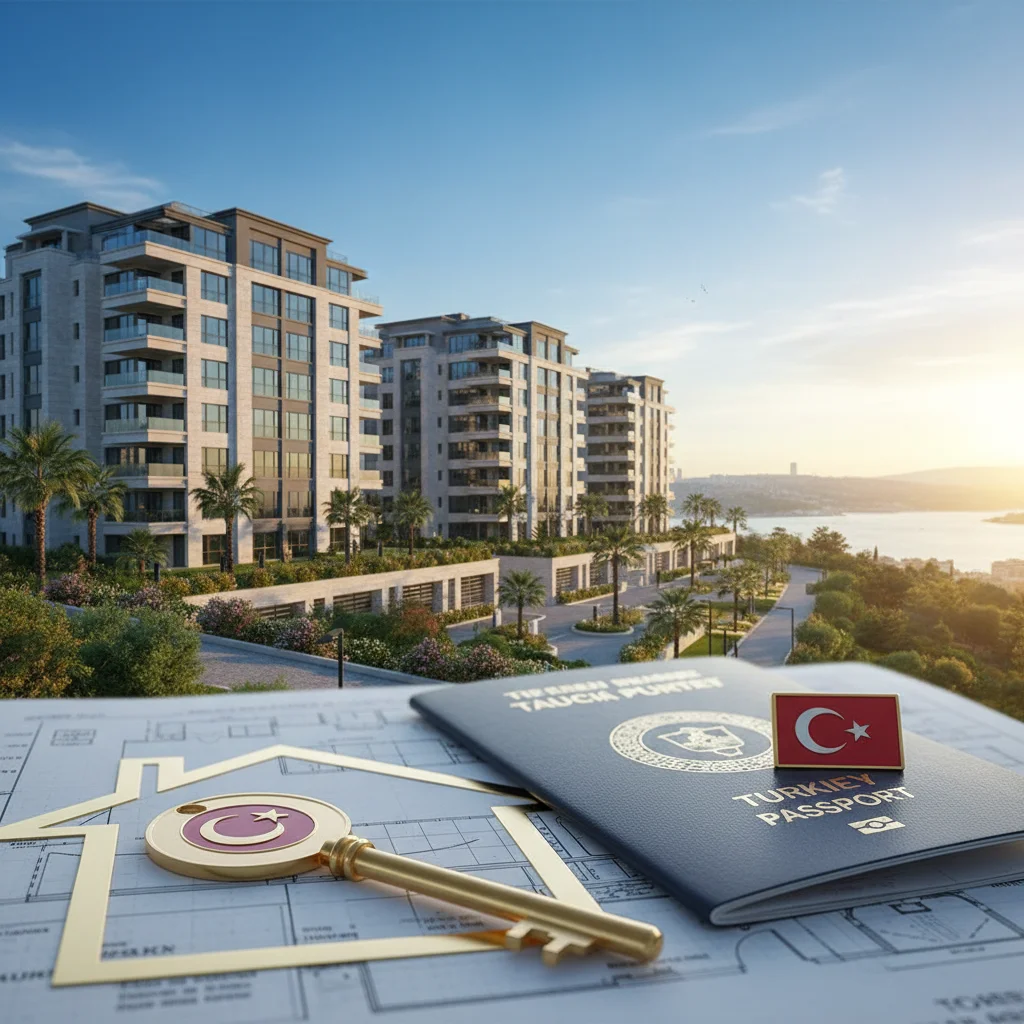
The legal foundation for citizenship through property acquisition is governed by the Regulation on the Implementation of the Turkish Citizenship Law. Under current 2026 rules, applicants must satisfy strict financial, title-deed, and compliance benchmarks to receive a Certificate of Conformity (Uygunluk Belgesi).
To qualify for Turkish citizenship by real estate investment, a foreign national must purchase one or multiple properties with a combined declared and officially appraised value of at least $400,000 USD (or the equivalent in foreign currency). Key rules governing this threshold include:
When the title deed (Tapu) is transferred into your name, the General Directorate of Land Registry and Cadastre (Tapu ve Kadastro Genel Müdürlüğü) places a formal legal annotation (şerh) on the record stating that the property cannot be sold for three years from the date of registration. You are free to live in the property, lease it out to long-term tenants, or renovate it during those 36 months. Once the three-year clock finishes, the restriction can be lifted upon request, and you may sell the asset to any buyer without affecting your citizenship status.
Two technical documents make or break an application in 2026:
Every citizenship purchase requires an official real estate valuation report prepared by an appraisal firm licensed by the Capital Markets Board of Turkey (SPK). Under current allocation rules, appraisers are assigned through the Land Registry's centralized system (TADEBİS) to prevent inflated valuations. Both the SPK appraised value and the declared Tapu sales price must independently reach at least $400,000—along with the actual bank transfer receipts.
Under CBRT capital regulations, the buyer must sell the foreign currency purchase amount (USD, EUR, GBP, etc.) to a Turkish bank before the Tapu transfer is finalized. The bank converts the funds into Turkish Lira via the Central Bank and issues a Döviz Alım Belgesi (DAB). The seller receives the Turkish Lira equivalent, and the DAB reference number is linked directly to your title deed transaction.
One $400,000 investment covers a single nuclear family unit:
Adult children aged 18 or older are not automatically included unless they have a documented severe disability requiring continuous parental care; otherwise, they must apply independently.
Turkey's citizenship program is remarkably flexible regarding asset class. Whether you prioritize capital preservation, high rental cash flow, or lifestyle use, the following property types qualify provided they carry proper zoning and condominium or construction servitude status:
Modern apartments inside master-planned residential complexes (site) remain the preferred choice for international buyers. Branded residences in Istanbul and coastal hubs offer 24/7 security, concierge services, fitness facilities, and professional building management—making remote ownership far easier for non-resident investors.
Detached villas in regions such as Bodrum, Antalya, Fethiye, Sapanca, or Istanbul's Beykoz and Büyükçekmece districts combine strong seasonal short-term rental potential with long-term land appreciation. Always verify that the villa holds a valid habitation certificate (İskan) and that there are no unregistered structural extensions.
Retail shops, high-street commercial units, and Grade-A offices in business corridors such as Maslak, Levent, Ataşehir, and Ankara's Çankaya district frequently deliver higher net rental yields than residential units, often backed by multi-year corporate lease agreements.
Agricultural land does not qualify for citizenship unless specific ministerial conditions are met, and pure unzoned plots carry strict development deadlines requiring a formal building project submission within two years. For most citizenship applicants, finished residential or commercial units with Kat Mülkiyeti (full freehold condominium title) or reputable Kat İrtifakı (construction servitude) carry far less compliance friction.
| Property Category | Typical Net Yield (2026) | Liquidity After 3 Years | Management Complexity | Best Suited For |
|---|---|---|---|---|
| Istanbul Branded Residences | 4.5% – 6.0% | High | Low | Capital preservation and corporate tenants |
| Commercial & Retail Units | 6.5% – 8.5% | Moderate | Low to Moderate | Yield-focused investors seeking longer leases |
| Coastal Villas (Antalya / Bodrum) | 5.5% – 7.5% (seasonal) | Moderate to High | Moderate to High | Lifestyle buyers and seasonal rental income |
| Off-Plan Developer Projects | N/A during build (discount entry) | Moderate | Low during construction | Buyers targeting 15%–25% completion uplift |
From property reservation to passport collection, a well-organized citizenship file typically takes between 4 and 6 months. Below is the exact operational sequence followed by experienced real estate attorneys in Turkey.
Budgeting solely for the $400,000 property price is a common mistake. Buyers should reserve approximately 6% to 8% above the property value to cover transaction taxes, legal representation, and government filing fees (excluding any VAT, if applicable).
| Expense Item | Estimated Cost (2026) | Notes & Who Pays |
|---|---|---|
| Title Deed Transfer Tax (Tapu Harcı) | 4% of declared value | Legally split 2% buyer / 2% seller, though custom often places the full 4% on the buyer unless negotiated otherwise. |
| Land Registry Revolving Fund Fee | Approx. $150 – $350 | Calculated annually by property location coefficient; paid by buyer. |
| SPK Valuation Report | Approx. $350 – $550 | Standard regulated fee depending on property size and type. |
| Notary & Sworn Translation Costs | $600 – $1,200 | Covers Power of Attorney, passport translations, and civil document notarization. |
| DASK (Compulsory Earthquake Insurance) | $50 – $180 / year | Mandatory before Tapu transfer and utility connections. |
| Legal Representation Fees | $3,500 – $7,000 | Depends on family size and whether the lawyer handles due diligence, residency, and full citizenship filing. |
| Investor Residency & Citizenship Filing Fees | $800 – $1,800 per family | Includes health insurance for residency, card fees, and citizenship application charges. |
| VAT (KDV) on New Builds | 0% (if exempt) or 10% – 20% | Foreign non-residents buying first-hand properties from developers with foreign currency brought into Turkey can often claim a 0% VAT exemption under Article 13/i of the VAT Law, provided the asset is held for 3 years. |
If you purchase a brand-new unit directly from a licensed construction company, standard VAT rates in Turkey range from 10% to 20% depending on unit size and land value. However, non-resident foreign individuals who have not lived in Turkey for more than six months in the preceding calendar year can apply for a full VAT exemption at the time of purchase—saving $40,000 to $80,000 on a $400,000+ new build. To keep this exemption, the purchase funds must arrive from abroad in foreign currency and the property cannot be resold within three years, aligning neatly with the citizenship holding requirement.
Looking for the best real estate investment opportunity in Istanbul?
We help you choose the right property based on your budget and goals
Get a Free Consultation
Turkey's real estate market is hyper-localized. A well-located unit near a metro line in Istanbul behaves entirely differently from a coastal villa in Antalya or a diplomatic residence in Ankara. Selecting the right micro-market depends on whether your priority is liquidity, USD-indexed rental yield, or personal relocation.
Accounting for the largest share of foreign real estate transactions nationwide, Istanbul offers unmatched depth for future resale after your three-year holding period.
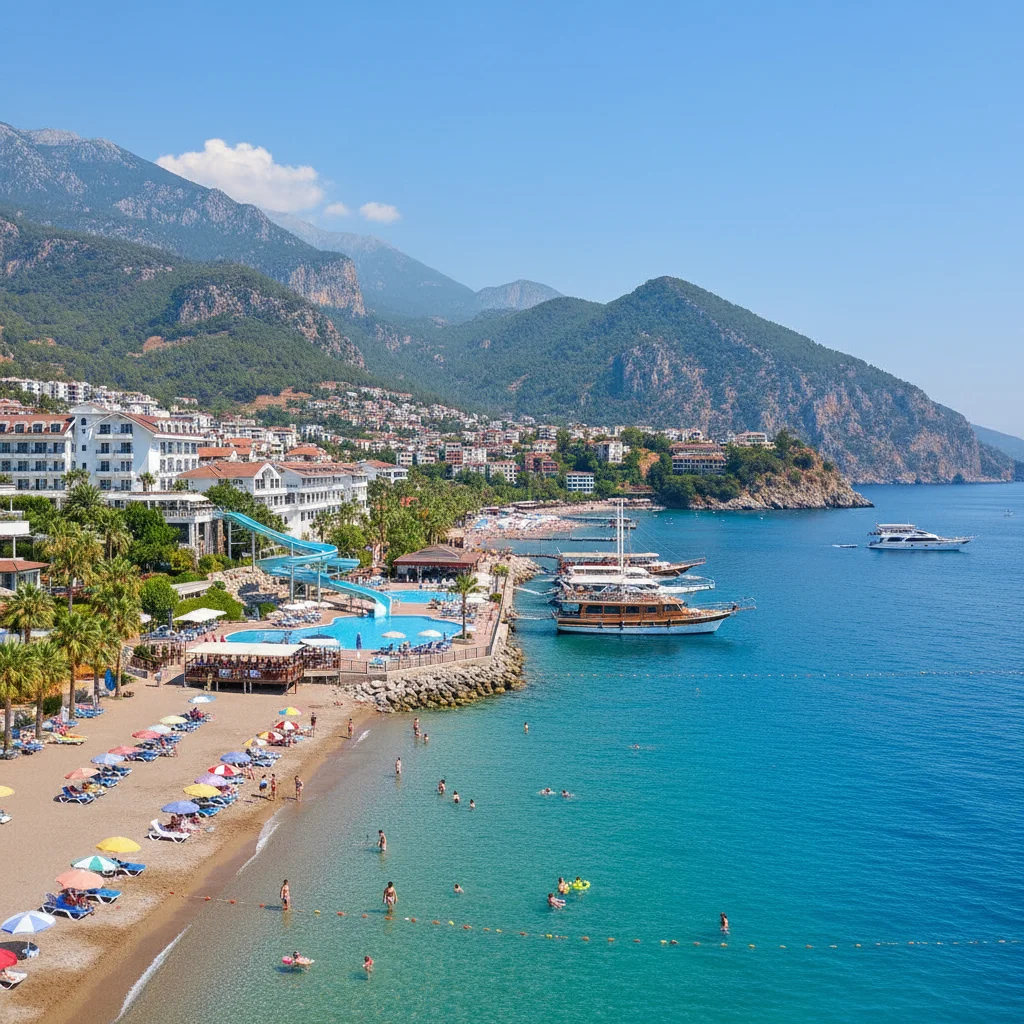
Antalya has cemented its position as Turkey's top Mediterranean hub for international residents, remote workers, and seasonal holidaymakers. Districts such as Konyaaltı, Lara, and Döşemealtı attract steady year-round demand from European and Middle Eastern buyers, while Belek and Alanya offer resort-style villas and managed complexes. Investors should verify district-level residency quotas if planning to rent to foreign tenants needing address registration.
As the nation's capital, Ankara experiences far less speculative price volatility than Istanbul or coastal resort markets. Districts like Çankaya, Oran, and İncek host embassies, ministries, and major universities, generating reliable tenant demand from diplomats, civil servants, and academics.
For buyers targeting higher-ticket villas ($750,000 to $2M+), Bodrum (Yalıkavak, Türkbükü, Gündoğan) and İzmir (Çeşme, Urla, Alsancak) represent Turkey's premier Aegean lifestyle markets. Supply of prime coastal land is heavily constrained, supporting strong long-term capital preservation.
Not every property buyer immediately commits $400,000. Turkey also offers a renewable real estate residence permit (Taşınmaz Amaçlı İkamet İzni) at a lower entry threshold of $200,000 USD (based on the official valuation report and Tapu value, subject to neighborhood residency quota availability). Understanding how the two routes compare helps clarify your strategy:
| Feature | Citizenship by Real Estate ($400,000) | Real Estate Residence Permit ($200,000) |
|---|---|---|
| Minimum Property Valuation | $400,000 USD | $200,000 USD |
| Outcome | Full Turkish Citizenship & Passport | 1–2 Year Renewable Residency Card |
| Right to Work Without Permit | Yes (full citizen rights) | No (separate work permit required) |
| District Closure Restrictions | Exempt for citizenship Tapu acquisition | Subject to closed-neighborhood 20% foreign quota rules |
| Holding Period | 3 years mandatory no-sale restriction | Must retain property to renew residency |
| Path to Naturalization via Residency | Immediate (approx. 4–6 months processing) | 5 years of continuous legal residency (with strict physical stay limits) |
Turkey fully permits dual and multiple citizenship. You are not required to renounce your existing nationality when naturalizing in Turkey, nor do you need to pass a Turkish language exam or fulfill a physical residency stay requirement prior to citizenship approval. Once naturalized, a Turkish passport provides visa-free or visa-on-arrival access to over 110 destinations worldwide—including Japan, South Korea, Singapore, Qatar, and most of Latin America—along with streamlined business mobility and eligibility to apply for the U.S. E-2 Investor Visa as a treaty country national (subject to U.S. consular criteria and active enterprise investment).
Buying the property is only the first phase of a successful citizenship investment. How you manage the asset during the mandatory three-year holding window determines your true net return.
Turkey has a well-defined tenant protection framework under the Turkish Code of Obligations. Key operational points for foreign landlords include:
If you reside outside Turkey, delegating operations to a licensed property management firm prevents administrative headaches. A thorough management partner should handle:
At the 36-month mark, you have three main exit options: hold the asset for ongoing cash flow, refinance or restructure equity, or lift the Tapu annotation and sell into the domestic Turkish market. Because domestic buyers represent the vast majority of Turkey's secondary housing market, investing in neighborhoods with genuine local demand—near metro stations, top schools, hospitals, and commercial centers—ensures you are never reliant solely on foreign buyers when it is time to sell.
Most disputes in Turkish real estate stem from skipping independent legal verification or relying exclusively on sales brokers. Protect your capital by checking every item below before wiring funds:
Yes. You may purchase two or more residential or commercial properties whose combined SPK appraised values, DAB conversion receipts, and declared Tapu values each equal at least $400,000 USD. All properties must receive the three-year no-sale annotation.
No. Once your Turkish citizenship is approved and your passport is issued, there is no minimum stay requirement to keep your citizenship. You can live anywhere in the world while retaining your Turkish nationality.
No. The $400,000 qualifying investment must represent your own net equity paid via bank transfer. If a property costs $600,000 and carries a $200,000 mortgage, only the $400,000 net equity paid free of encumbrance can count—and in practice, purchasing unencumbered properties without bank mortgages avoids delays at the Land Registry.
Nothing happens to your citizenship. Turkish citizenship acquired by investment is permanent and lifetime. After three years from the date of the Land Registry annotation, you can apply to remove the restriction and sell the property freely while keeping your passport and passing citizenship rights to future children.
Under current Turkish legislation, foreign male applicants who acquire Turkish citizenship at age 22 or older are generally exempt from compulsory military service. Applicants who obtain citizenship as minors alongside their parents may be subject to standard rules once reaching military age, or eligible for exemption/deferral if they hold dual nationality and completed service abroad under bilateral recognition rules—an attorney should review individual family ages prior to filing.
Yes, rental income earned in Turkey is subject to progressive Turkish income tax after allowable deductions (either the lump-sum 15% expense method or actual documented expenses). For individual investors holding a property for less than five years, capital gains on resale are taxed progressively; however, properties held by individuals for more than five full years are completely exempt from Turkish capital gains tax upon sale.
Note: Information in this article was sourced from Emlak Platform, Mbany Real Estate, and Massar Istanbul.