US Dollar - USD
- Turkish Lira - TRY
- US Dollar - USD
- Euro - EUR
- Pound sterling - GBP
- Russian Ruble - RUB
- Chinese Yuan - CNY
- Georgian lari - GEL
- Saudi Riyal - SAR
- UAE Dirham - AED
- Syrian Pound - SYP
International capital allocation has undergone profound structural shifts over recent years, yet Turkey remains one of the world's most resilient and dynamic transcontinental property hubs. Positioned strategically at the intersection of Europe, Asia, and the Middle East, the Turkish real estate market offers cross-border investors a compelling combination of competitive square-meter valuations, currency-hedged rental demand, and institutional pathways to citizenship and permanent relocation.
In 2026, Turkey's housing sector continues to mature through tightened fiscal regulations, modernized urban transformation frameworks, and an infrastructure pipeline that reshapes domestic logistics. The stabilization of monetary policies by the Central Bank of the Republic of Turkey (CBRT) and the focus on inflation control have established a more transparent, predictable market for foreign institutional funds and private family offices alike. International investors are no longer seeking quick speculative turnarounds; instead, the focus has shifted toward high-quality, earthquake-resistant master developments, yield-bearing commercial real estate, and prime coastal holiday homes.
The acquisition of real estate in Turkey by foreign nationals is governed by Article 35 of the Land Registry Law No. 2644. Since the formal abolition of the reciprocity requirement in 2012, citizens of more than 180 countries have enjoyed legal standing to purchase residential, commercial, and agricultural property. However, institutional procedures and cross-border capital controls require absolute adherence to statutory due diligence.
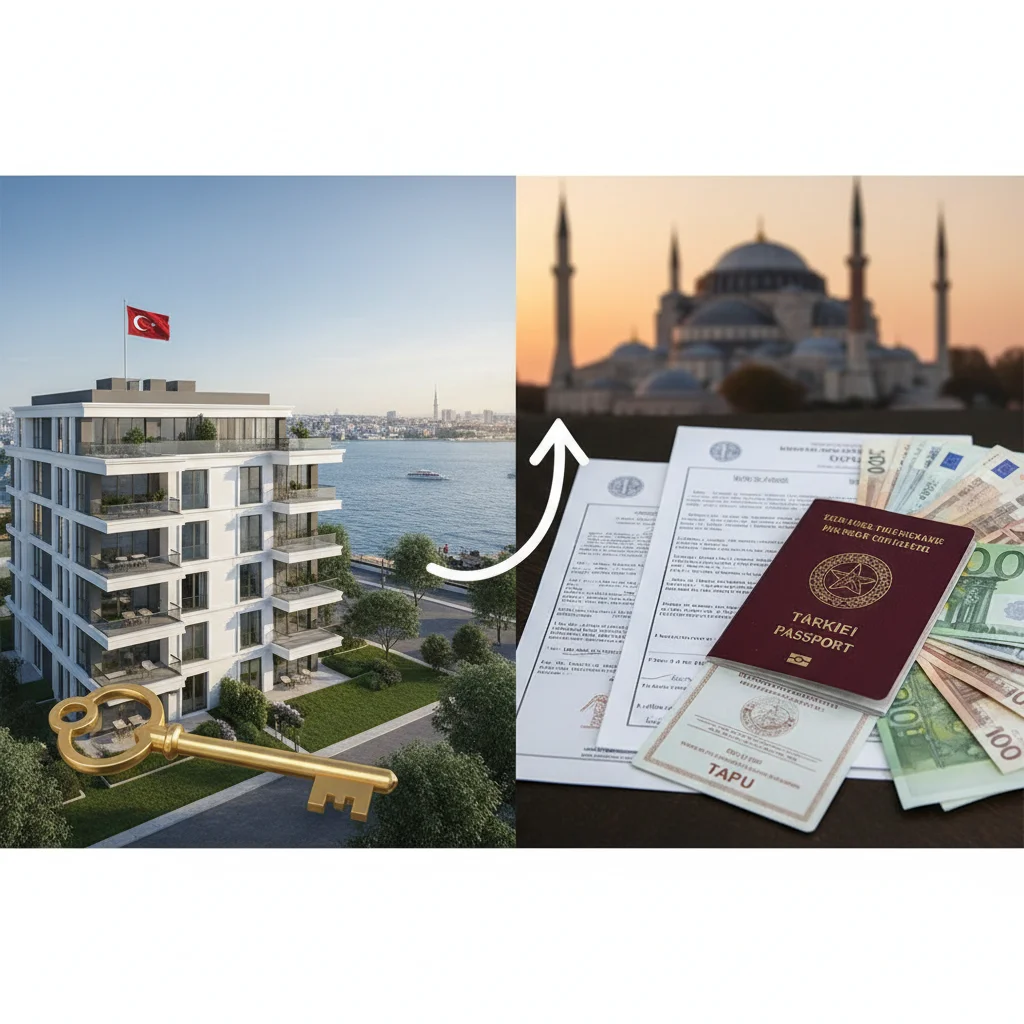
In Turkey, private contracts executed before a notary public do not transfer property ownership. Legal conveyance occurs exclusively at the official Land Registry Office (Tapu Dairesi). The primary legal title deed, known as the Tapu, is the definitive, state-guaranteed proof of ownership. Title deeds are categorized into two fundamental legal statuses:
Acquiring a unit lacking an İskan or stuck in unauthorized construction phases presents substantial liquidity, regulatory, and physical risks. Ensuring that title deeds feature clear condominium status remains a foundational priority for risk-averse investors.
Foreign buyers must comply with two financial and compliance benchmarks prior to title deed transfer:
The Turkish Citizenship by Investment program stands as one of the most operationally efficient economic citizenship systems globally. Regulated under the Regulation on the Implementation of the Turkish Citizenship Law, international buyers can secure full citizenship for themselves, their spouse, and dependent children under the age of 18 through strategic real estate investments.
To qualify for Turkish citizenship, an investor must acquire real estate with a cumulative minimum value of $400,000 USD (or the exact equivalent in foreign currency converted through the DAB system). Crucially, this value must be authenticated across three separate parameters:
A deficiency in any one of these three metrics invalidates the transaction for citizenship application purposes.
The core statutory commitment of the TCBI framework is the three-year non-disposal undertaking. During the final conveyance stage, the Land Registry inserts a formal annotation (Şerh) into the property's digital registry record, stating that the asset cannot be transferred, sold, or liquidated for a period of 36 months.
During this period, the owner retains total beneficial ownership: the property may be leased, lived in, or placed within a managed rental pool to yield recurring passive cash flow. Once the 36-month timeline expires, the annotation is formally lifted upon request, and the asset can be liquidated on the open secondary market without compromising the investor's acquired citizenship status.
Institutional buyers must recognize critical compliance barriers:
Looking for the best real estate investment opportunity in Istanbul?
We help you choose the right property based on your budget and goals
Get a Free Consultation
For investors not pursuing direct economic citizenship, the Turkish Directorate General of Migration Management (Göç İdaresi) provides an immoveable property residency permit (Taşınmaz İkamet İzni). This route grants foreign buyers residency stability without demanding permanent fiscal or personal relocation.
Under current regulatory directives, the minimum valuation required for a foreigner to obtain a residence permit based on property acquisition is established at $200,000 USD. This sum is verified exclusively through the property's official purchase price and registered title deed value, backed by SPK valuation data across all metropolitan and provincial municipalities.
Standard tourist residence permits face stringent restrictions and elevated rejection rates. Conversely, real estate-backed residency remains an objective, non-discretionary right so long as the title deed remains registered under the applicant's name and meets the statutory property value. Crucially, consecutive residency on this permit can pave the way toward standard long-term naturalization pathways, provided the residency requirements outlined in Law No. 6458 are fulfilled.
Macroeconomic yields vary dramatically across Turkey’s metropolitan regions. Analyzing local demographics, construction trends, and transportation arteries is necessary to ensure sustainable capital preservation and rental performance.
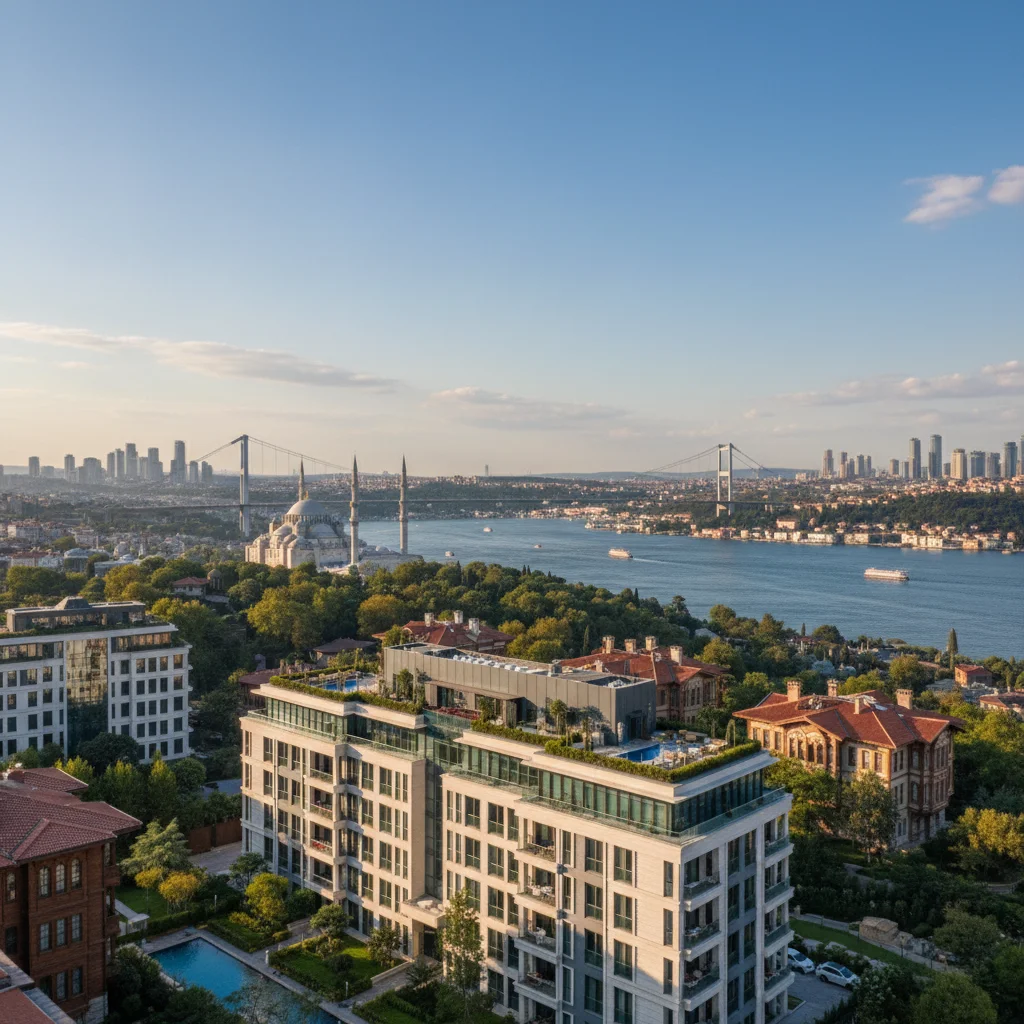
Istanbul represents the economic engine of Turkey, generating over 30% of the nation's GDP. Housing supply in central zones remains constrained, while outward expansion relies heavily on high-speed rail, metro networks, and the modern Istanbul Airport infrastructure corridor.
Antalya maintains its standing as the primary coastal destination for international expatriates and foreign buyers. Sub-markets such as Konyaaltı and Lara demand high price premiums due to strict coastal land zoning limits, while expanding areas like Kepez and Aksu offer lower entry costs for long-term growth.
Properties here function as hybrid investments: owners often utilize their apartments for private seasonal holidays, releasing them into managed short-term corporate and holiday rental pools for the remainder of the calendar year.
Bodrum has evolved from a seasonal Turkish retreat into an international luxury destination, rivaling European hotspots like Saint-Tropez and Marbella. Ultra-prime micro-markets including Yalıkavak, Türkbükü, and Gümüşlük feature branded residences operated by international hotel flags. These developments command elevated yields in international currencies, appealing to global family offices and ultra-high-net-worth individuals.
| City / Region | Average Price Range (USD/m²) | Gross Rental Yield | Primary Tenant Demographic | Primary Growth Driver |
|---|---|---|---|---|
| Istanbul (Central Prime) | $3,500 – $8,500+ | 4.5% – 6.0% | Multinational Execs, Expats | Urban Land Scarcity & Infrastructure |
| Istanbul (Growth Corridors) | $1,800 – $3,200 | 6.5% – 8.5% | Young Professionals, Students | Metro Expansion & Financial Center |
| Antalya (Coastal Districts) | $2,200 – $4,500 | 7.0% – 9.0% | Digital Nomads, Seasonal Tourists | Year-Round Tourism & Airport Growth |
| Bodrum (Ultra-Luxury) | $5,000 – $14,000+ | 5.0% – 7.5% | HNWIs, Global Elite | Branded Residences & Super-Yacht Marinas |
| Ankara (Diplomatic Hubs) | $1,200 – $2,400 | 6.0% – 7.5% | Diplomats, Civil Servants | Administrative Stability & Universities |
Evaluating Turkish real estate demands precision regarding transactional friction costs, recurring obligations, and statutory limits on rental operations.
The operational framework for short-term tourism rentals (e.g., Airbnb, Vrbo) is regulated under Law No. 7464, governing the Lease of Residential Properties for Tourism Purposes. Key compliance points include:
For standard residential leases exceeding one year, rental increases are linked to the domestic inflation metrics. In standard statutory contracts, annual rent increases cannot surpass the twelve-month rolling average of the Consumer Price Index (TÜFE). Professional asset managers counter local currency depreciation by structuring commercial leases or securing high-credit domestic and corporate tenants who comply with updated payment structures.
Looking for the best real estate investment opportunity in Istanbul?
We help you choose the right property based on your budget and goals
Get a Free Consultation
Successful international real estate investments depend on deliberate risk management protocols designed to insulate portfolios from regional volatility.
Fluctuations in the Turkish Lira require balanced financial strategies. The most effective safeguards involve:
Acquiring off-plan real estate offers substantial discounts (often 15% to 30% below market value upon launch), but construction and delivery risk must be mitigated. Key verification steps include:
Remote landlords require experienced local asset managers to maintain cash-flow performance. Modern property management companies provide turn-key operations, handling tenant screening, lease contract notarization, eviction protection, utility maintenance, and tax filings, ensuring stable net yields without the burden of day-to-day oversight.
Yes. Turkey recognizes the legal principle of inheritance for international property owners. Under Turkish civil law, immovable property situated within national borders is governed by Turkish inheritance laws, guaranteeing legal heirs clear succession rights, subject to standard local inheritance tax declarations.
Yes. An investor can acquire multiple apartments, commercial suites, or land plots, provided the combined valuation reaches or exceeds $400,000 USD on the date of transaction, and all applications are filed simultaneously with corresponding valuation reports and central bank foreign exchange certificates (DAB).
The qualifying value is locked in and legally validated at the exact moment of the Title Deed transfer and the acquisition of the Certificate of Conformity (Uygunluk Belgesi). Subsequent market fluctuations or currency variations during or after the three-year holding period have no impact on your granted Turkish citizenship status.
No. Under the updated regulations enforced by the Directorate General of Migration Management, property-based residency permits (İkamet) require the acquired real estate to be classified specifically as a residential dwelling (konut) and utilized for actual residential living.
Market insights and regulatory references compiled in collaboration with cross-border real estate data from Emlak Platform, institutional advisory analysis by Mbany Real Estate, and metropolitan urban research from Massar Istanbul.