US Dollar - USD
- Turkish Lira - TRY
- US Dollar - USD
- Euro - EUR
- Pound sterling - GBP
- Russian Ruble - RUB
- Chinese Yuan - CNY
- Georgian lari - GEL
- Saudi Riyal - SAR
- UAE Dirham - AED
- Syrian Pound - SYP
The historical, cultural, and economic ties between Turkey and the Arab world have created a natural bridge for migration, commerce, and cross-border wealth management. Over the past decade, hundreds of thousands of Arab nationals—ranging from Gulf Cooperation Council (GCC) citizens seeking stable secondary residences to individuals from the Levant, Iraq, Egypt, and North Africa pursuing political stability and global mobility—have turned to Turkey. The Turkish Citizenship by Investment (CBI) program stands out as one of the most accessible, transparent, and rewarding economic citizenship routes worldwide.
Entering 2026, Turkey’s strategic positioning between East and West, combined with a dynamic domestic economy and resilient property market, makes Turkish citizenship particularly compelling. Investors secure a robust Tier-B passport offering visa-free or visa-on-arrival entry to over 110 destinations, alongside a secure safe haven for capital, access to world-class medical facilities, high-standard multilingual education, and an environment that respects Islamic traditions and lifestyle preferences.
The Turkish Citizenship Law No. 5901, particularly Article 12 and its implementing regulations, sets the statutory baseline for acquiring nationality through exceptional economic contribution. The program has undergone several regulatory adjustments to align with national monetary policy and real estate market dynamics.
The primary route chosen by over 90% of Arab applicants is the real estate investment channel. To qualify under current regulations in 2026:
While property purchase remains the most popular avenue, the Turkish government provides alternative financial mechanisms:
The following table outlines the criteria, minimum holding terms, and governing bodies for each investment category available to Arab investors:
| Investment Category | Minimum Capital (USD) | Mandatory Holding Term | Supervising Authority |
|---|---|---|---|
| Real Estate Acquisition | $400,000 | 3 Years | Ministry of Environment, Urbanization and Climate Change |
| Bank Deposit (YUVAM) | $500,000 | 3 Years | Banking Regulation and Supervision Agency (BDDK) |
| Government Bonds | $500,000 | 3 Years | Ministry of Treasury and Finance |
| Venture Capital / Fund Shares | $500,000 | 3 Years | Capital Markets Board of Turkey (SPK) |
| Job Creation | 50 Full-time Employees | 3 Years | Ministry of Labor and Social Security |
Looking for the best real estate investment opportunity in Istanbul?
We help you choose the right property based on your budget and goals
Get a Free Consultation
Purchasing property for citizenship requires compliance with technical and administrative protocols. Failure to execute these steps accurately can disqualify a transaction or cause substantial delays.
Under Central Bank of the Republic of Turkey (TCMB) regulations, foreign property buyers must exchange their foreign currency (USD, EUR, GBP, SAR, AED, QAR, etc.) into Turkish Lira through an authorized Turkish commercial bank before executing the title deed transfer. The central bank issues a Döviz Alım Belgesi (DAB) verifying that foreign currency equal to at least $400,000 entered the Turkish financial ecosystem specifically for real estate acquisition. The developer or seller must receive the payment directly in Turkish Lira transferred from the buyer's account.
Before the title deed transfer, an independent real estate appraisal firm licensed by the Capital Markets Board (SPK) must inspect and value the property. The valuation report must confirm that the market valuation matches or exceeds the declared sales figure and meets the $400,000 legal baseline. In 2026, web-based automated verification systems run by the Land Registry ensure transparency and prevent artificial price inflation.
The property chosen must not have been used previously to obtain Turkish citizenship. Moreover, the seller must be a Turkish citizen or a 100% Turkish-owned corporate entity. Properties bought from foreign individuals or corporate entities with foreign shareholding do not qualify for citizenship, even if the valuation and sales figures exceed $400,000.
At the Land Registry office, the title deed must be endorsed with an explicit clause confirming that the property cannot be transferred or sold for three years. Arab owners are free to rent out their residential or commercial units, generate foreign currency-indexed or local rental yields, and retain all rental proceeds during this holding period.
Obtaining Turkish citizenship via property acquisition follows a structured legal path that generally takes between 90 and 120 days from initial selection to passport issuance.
Most foreign investors execute a Special Power of Attorney (PoA) in favor of an independent, Bar-registered Turkish immigration lawyer. This PoA can be issued at a Turkish embassy or consulate across the Middle East (e.g., Riyadh, Dubai, Doha, Kuwait City, Amman, Cairo) or notarized locally within Turkey. The legal team conducts comprehensive title searches to verify that the target properties are free of liens, mortgages, court attachments, or environmental restrictions.
The investor transfers capital from their home bank or international account to their newly opened account in Turkey. The bank converts the funds via the TCMB system, issues the Döviz Alım Belgesi (DAB), and credits the seller's account upon completion of the transaction.
The Land Registry issues the Tapu with the three-year citizenship restriction. The Land Registry transmits the transaction file to the Ministry of Environment, Urbanization and Climate Change, which reviews the valuation, payment receipts, and contract terms before issuing the formal Certificate of Conformity (Uygunluk Belgesi).
Unlike standard short-term touristic residence permits, citizenship investors are granted a specialized residence permit under Article 31/J of the Law on Foreigners and International Protection. This permit is issued without standard minimum residency stay requirements and serves as the legal bridge to the citizenship file.
The General Directorate of Population and Citizenship Affairs conducts a thorough background and security screening through the Turkish National Police and Intelligence organizations. The review assesses whether the applicant poses any threat to national security or public order. Once cleared, the file is forwarded to the Presidency of the Republic of Turkey for final ratification.
Upon presidential approval, citizenship decrees are published. The investor and all qualifying family members provide biometric data (fingerprints and digital signatures) at the Provincial Population Directorate in Turkey or at any Turkish diplomatic mission worldwide. Turkish identity cards (Kimlik) and biometric passports are delivered via secure courier within 5 to 10 working days.
Looking for the best real estate investment opportunity in Istanbul?
We help you choose the right property based on your budget and goals
Get a Free Consultation
A major advantage of the Turkish citizenship program is its comprehensive family coverage under a single qualifying investment:
Understanding civil duties and legal dual-nationality statuses is vital for Arab investors planning their long-term family affairs.
Turkish law permits multiple nationalities without restriction. Arab citizens from jurisdictions that permit dual citizenship (such as Lebanon, Syria, Jordan, Egypt, Iraq, Yemen, and Morocco) can retain their native passports without conflict. For investors from Gulf states that impose restrictions on dual citizenship (Saudi Arabia, the UAE, Qatar, Kuwait, Oman, Bahrain), wealth managers and legal advisors frequently structure investments so that personal records remain fully confidential within sovereign legal boundaries, adhering to bilateral conventions.
Military service in Turkey is mandatory for male Turkish citizens between the ages of 20 and 41. However, under the Military Penal Code and Conscription Law:
Different regions in Turkey cater to distinct investment goals, ranging from capital appreciation and commercial yields to holiday living and family relocation.
Istanbul remains the premier destination for institutional and private Arab capital. Key districts favored by Arab investors include:
Located south of the Marmara Sea, Bursa holds strong historical appeal for Arab visitors. Its thermal springs, lush green scenery, cooler mountain climate near Uludağ, and established manufacturing economy make it ideal for spacious villas and expansive residential compounds at prices lower than Istanbul.
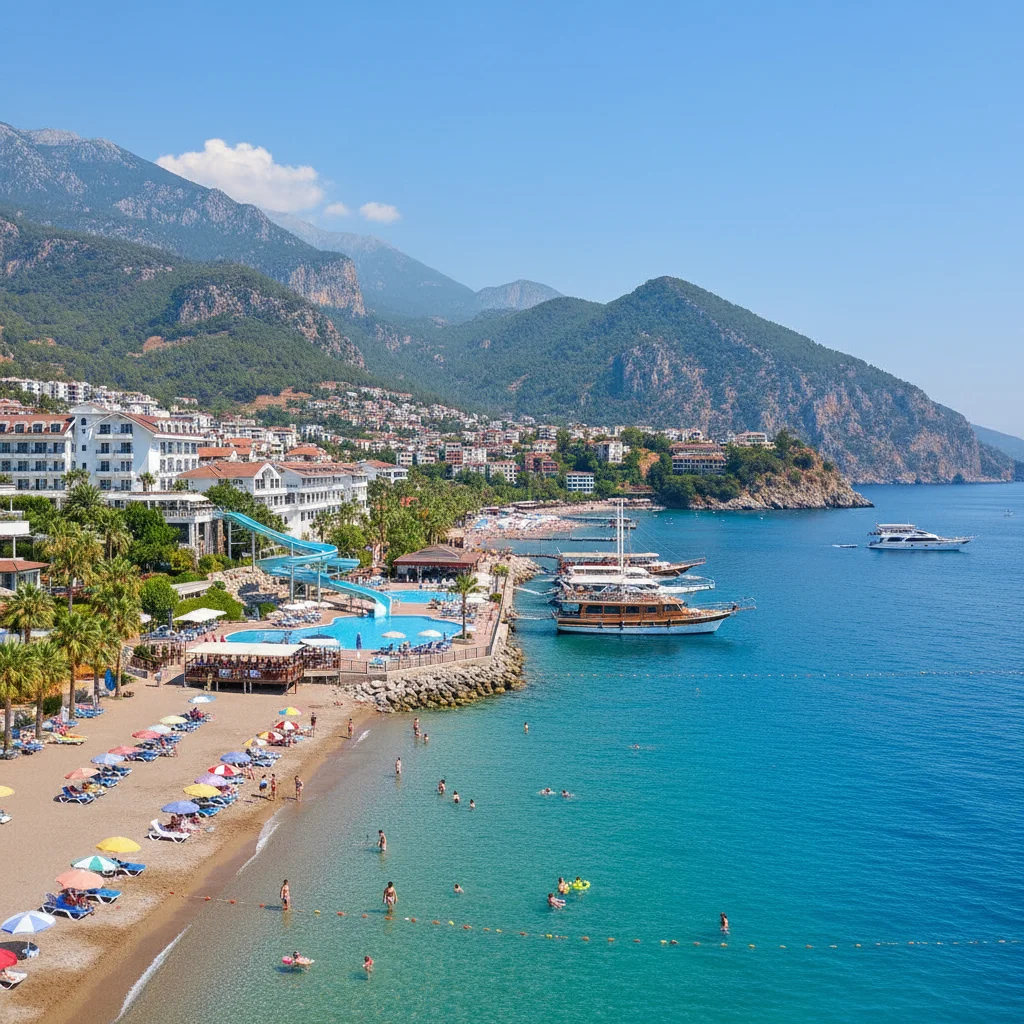
Antalya appeals to investors focused on tourism-driven short-term rental yields and holiday homes. Districts such as Konyaaltı, Muratpaşa, and Alanya deliver high occupancy rates during extended holiday seasons, providing income yields indexed to foreign currencies.
Particularly favored by Saudi, Kuwaiti, and Qatari families, Trabzon, Rize, and Ordu feature moderate summer climates, dense pine forests, and mountain landscapes. Real estate here focuses primarily on standalone panoramic villas, agricultural estates, and private hillside residences.
Understanding the tax landscape helps Arab buyers optimize their property acquisitions and holding structures.
To ensure swift document verification, all paperwork from the applicant's country of origin must be properly legalized or apostilled:
Yes. The three-year restriction applies exclusively to the sale, transfer, or alienation of the title deed. Investors are fully entitled to occupy the residence, lease it under annual residential contracts, or run commercial operations to earn rental income from the first day of ownership.
Under Turkish reciprocity and land registration laws, Arab nationals can acquire residential units, commercial offices, and developable zoned land (Arsa). Unzoned agricultural land (Tarla) involves specific development conditions: buyers must submit an architectural or agricultural project to the Ministry of Agriculture and Forestry within two years of acquisition.
Your Turkish citizenship is granted permanently. Once the mandatory three-year holding period expires, you can sell the property, repatriate the capital, or reinvest it in other assets without impacting the citizenship status of you or your family members.
Holders of recognized Palestinian Authority passports can purchase real estate and acquire citizenship under standard terms. Individuals holding specialized refugee travel documents issued by third countries (such as Lebanon, Syria, or Egypt) must undergo prior document review by the Directorate General of Migration Management (GÖÇ İdaresi) to determine eligibility.
Turkey complies with international financial compliance norms such as the OECD Common Reporting Standard (CRS). However, citizenship acquisition records are treated as sovereign national data and are not automatically transmitted to domestic civil registries of foreign states.
The Turkish citizenship by investment program remains one of the most reliable and culturally welcoming options for Arab business owners, executives, and families seeking global mobility and economic security. By combining a tangible, appreciating asset in a major regional economy with the lifelong benefits of Turkish nationality, investors build an enduring foundation for future generations.
To navigate dynamic regulations, currency protocols, and title examinations smoothly, prospective buyers are advised to work with experienced legal counsel and licensed real estate brokerages throughout their acquisition process.
Information and regulatory guidelines referenced in this article were sourced from official publications and market analyses provided by: